


High in the forests of Phnom Kulen (Kulen Mountain) in Siem Reap Province, Cambodia, there are places where nature, history, and Khmer cultural memory come together in a quiet and powerful way. Perng Takho (ពើងតាខុ), also known locally as Perng Chruon (ពើងជ្រួញ), is one of those places.
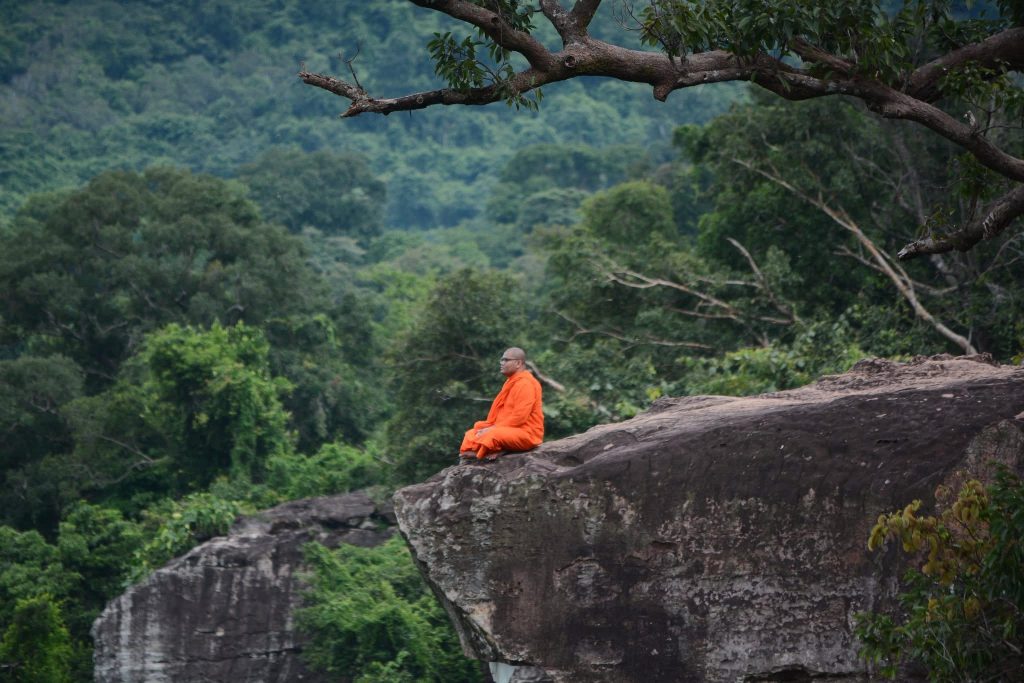
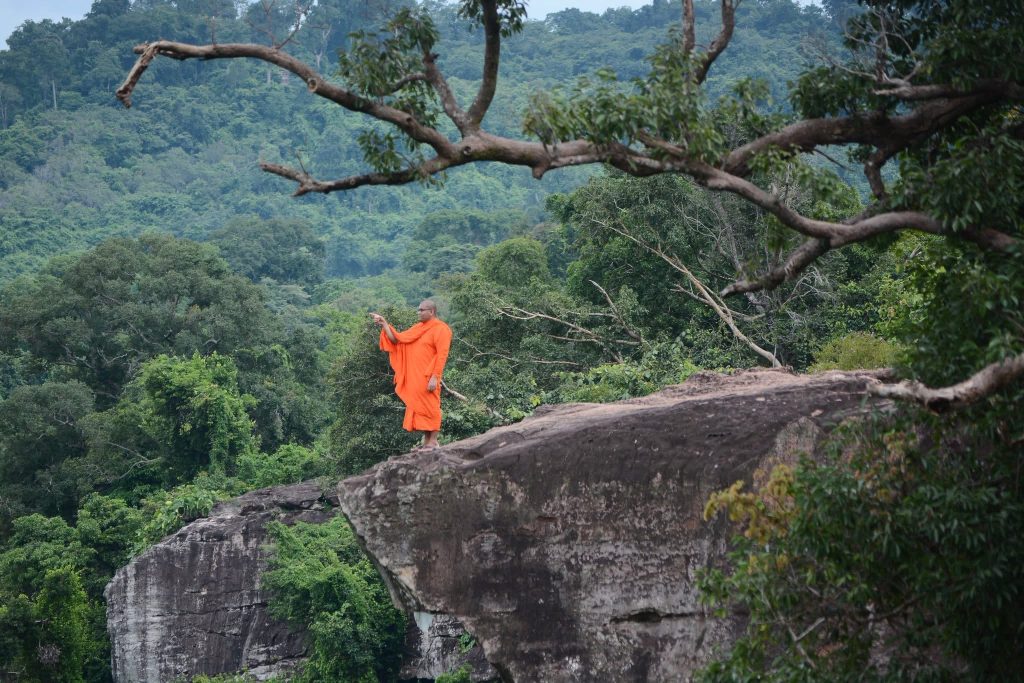
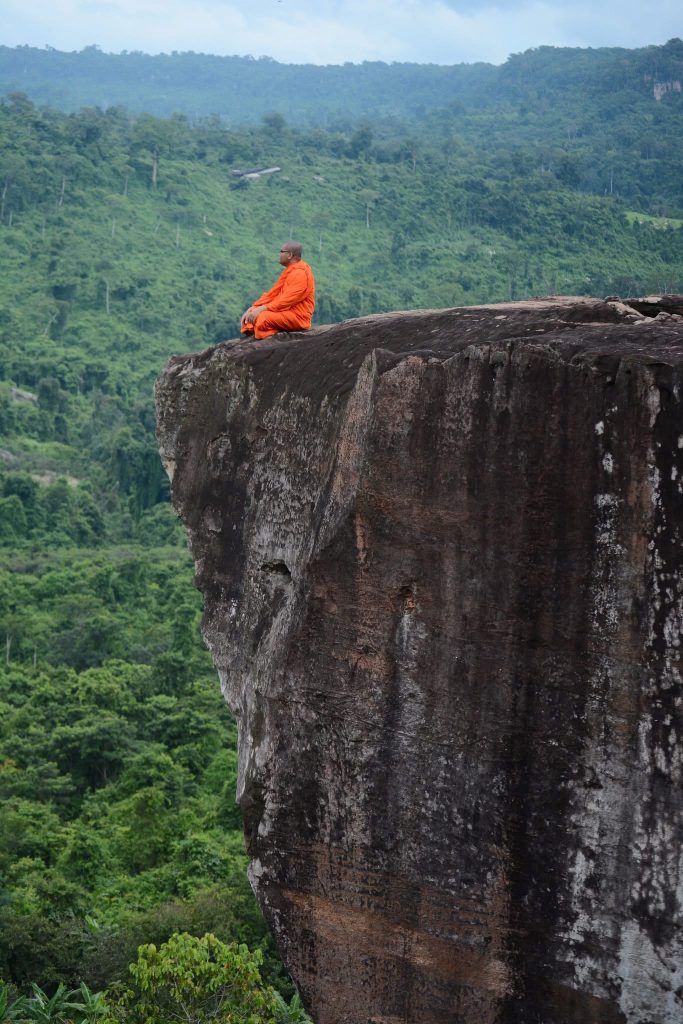
Along the mountain road, visitors can encounter enormous rock formations that project from the mountain and create a natural viewpoint over the surrounding forest. The rocks have unusual, folded-looking surfaces, which help explain the local name Perng Chruon. From the edge of the rocks, the view opens toward layers of green forest and distant hills, creating a peaceful landscape that feels far removed from the busy world below.
But Perng Takho is more than a beautiful viewpoint. It sits on Phnom Kulen, a mountain range deeply connected with the early history of the Khmer Empire. For Cambodians, visiting this landscape can be a way to appreciate not only the beauty of the country, but also the long relationship between Khmer people, sacred places, forests, water, stone, and history.
At a Glance: Perng Takho
- Khmer name: ពើងតាខុ
- Also known as: ពើងជ្រួញ (Perng Chruon)
- Location: Phnom Kulen (Kulen Mountain), Siem Reap Province, Cambodia
- Type of place: Natural rock formation and mountain viewpoint
- Known for: Large projecting rocks, unusual folded rock surfaces, forest views, and a peaceful mountain atmosphere
- Cultural setting: Phnom Kulen and the ancient landscape of Mahendraparvata
On This Page
- What Is Perng Takho?
- The Beauty of Kulen Mountain
- Why Phnom Kulen Is Important in Cambodian History
- Perng Takho as a Place for Reflection
- Why Places Like Perng Takho Matter for Cambodian Culture
- Visiting Phnom Kulen with Respect
- Frequently Asked Questions
What Is Perng Takho?
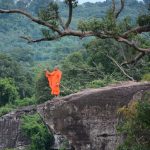
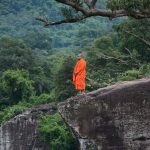
Perng Takho (ពើងតាខុ), sometimes called Perng Chruon (ពើងជ្រួញ), is a natural rock viewpoint on the route through Phnom Kulen. Its most distinctive feature is a series of large rocks that extend outward from the mountain, with surfaces shaped by nature into unusual folds and contours.
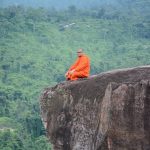
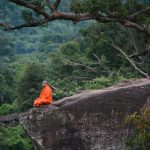
The location provides an expansive view of the forested landscape. Instead of looking at a single monument, visitors stand above a living landscape of trees, mountains, rock, and sky. The experience is especially memorable because the bright orange of a monk’s robe, the dark stone, and the deep green forest create a striking contrast.
The name Perng Chruon can be understood locally in connection with the unusual, wrinkled or folded appearance of the rock. Like many Cambodian place names, the name itself can preserve a connection between the landscape and the way local people see and describe it.
Perng Takho and the Beauty of Kulen Mountain
One of the special qualities of Perng Takho is that the landscape does not feel separated into “nature” and “culture.” The road climbs through the mountain environment, surrounded by forest, while the rock formations provide natural spaces for people to pause, look, reflect, and appreciate the land.
From the viewpoint, the forest appears to continue almost endlessly across the mountain landscape. On a clear day, the different shades of green reveal layers of vegetation and distant ridges. The large rocks in the foreground remind us that this landscape has been shaped by natural processes over a very long period of time.
For visitors interested in photography, Perng Takho is particularly attractive because every direction offers a different composition. A wide view can show the relationship between the rock and the forest, while a closer view emphasizes the texture of the stone and the dramatic drop beyond it.
Why Phnom Kulen Is Important in Cambodian History
To understand why a place like Perng Takho matters, it is important to look beyond the viewpoint itself and understand the history of Phnom Kulen.
Phnom Kulen is associated with Mahendraparvata, an early Khmer capital established in the late eighth or early ninth century. Archaeological research has identified temples, reservoirs, channels, roads, settlement areas, and other remains across the plateau. The ancient landscape shows that Phnom Kulen was not simply a remote mountain; it was part of a carefully organized political, religious, and water-management system.
Phnom Kulen is especially significant in the history of King Jayavarman II. According to the historical record described by UNESCO, Jayavarman II proclaimed independence from Java in 802 CE at Mahendraparvata and initiated an important royal cult associated with the early Khmer Empire.
For this reason, it is better to think of Phnom Kulen as one of the important early foundations of the Angkorian world rather than simply saying that the entire Angkor Empire “began” at one single location. The mountain is part of the story of how early Khmer political, religious, and cultural power developed before the great monuments of Angkor became the center of the empire.
From Mahendraparvata to Angkor
The story of Angkor did not happen overnight. It developed through several early centers, rulers, religious traditions, settlements, and systems of water management.
Mahendraparvata on Phnom Kulen is one of the earliest capitals associated with the Angkorian period. Later, political centers developed elsewhere, including Hariharalaya in the Roluos area, before Angkor became the great center that is now famous throughout the world.
This history gives Phnom Kulen a special place in Cambodia’s cultural landscape. When visitors stand on a natural rock such as Perng Takho, they are not standing inside a temple or museum. Yet they are surrounded by the same broader landscape in which Khmer civilization developed, built cities, created sacred spaces, managed water, and expressed its understanding of the relationship between humans, nature, and the divine.
A Landscape Connected to Water and Life
Phnom Kulen is important not only because of its archaeological history. The mountain also plays a major environmental role in the wider Siem Reap region.
The mountain is the source area for rivers and streams that flow toward the Angkor region. UNESCO notes that Phnom Kulen contributes to the water system that nourished the landscape around Angkor. Ancient Khmer communities developed reservoirs, channels, ponds, and other water infrastructure as part of their settlement system.
This connection between mountain, forest, water, and settlement is one of the most meaningful things to remember when visiting Kulen. The forest is not just scenery in the background. It is part of a larger landscape that has supported life and culture for centuries.
What Makes the View from Perng Takho Special?
- Natural rock formations: Large sandstone rocks project from the mountain and create a dramatic natural viewpoint.
- Unique rock texture: The folded and weathered surfaces give the site its distinctive local character.
- Forest views: The viewpoint overlooks extensive green forest and distant mountain landscapes.
- Quiet atmosphere: Away from the main urban environment, the mountain provides space for stillness and reflection.
- Cultural setting: The viewpoint is located within Phnom Kulen, a landscape closely connected with early Khmer history.
- Photography: The combination of stone, forest, sky, and changing light creates strong natural compositions.
Perng Takho as a Place for Reflection
For me, places like Perng Takho offer something that a famous monument cannot always provide: the opportunity to become quiet.
When we look across a forest from a high rock, the problems that seemed large a few minutes earlier can begin to feel smaller. The mountains do not need to explain anything. The trees do not need to speak. We simply have the opportunity to stop and observe.
This is also where the landscape can connect naturally with Buddhist reflection. Buddhism teaches us to pay attention to impermanence, conditions, and the way the mind responds to what we experience. A mountain viewpoint can become a simple reminder that our lives are part of something much larger than our individual concerns.
Standing quietly, breathing slowly, and looking at the forest can itself become a small practice of mindfulness.
Why Places Like Perng Takho Matter for Cambodian Culture
Cambodian culture is not found only inside temples, museums, or historical books. It also lives in landscapes, local names, stories, journeys, family memories, religious practices, and the ways communities understand particular places.
Perng Takho is a good example of this broader idea of heritage. Its importance comes not only from the rocks themselves, but from its location within Phnom Kulen and the cultural landscape surrounding one of Cambodia’s most important early historical centers.
Promoting places such as Perng Takho can also encourage visitors to look beyond the most famous destinations. Angkor Wat is rightly one of Cambodia’s greatest treasures, but the story of Khmer civilization is much larger than one temple. Mountains, forests, rivers, ancient cities, village traditions, and sacred places all contribute to that story.
Visiting Phnom Kulen with Respect
Natural viewpoints are beautiful partly because they remain natural. Visitors can help protect Perng Takho and Phnom Kulen by treating the landscape with care.
- Do not leave plastic, food waste, or other rubbish behind.
- Stay on appropriate paths and avoid damaging vegetation.
- Do not carve names or messages into the rocks.
- Be careful near steep edges and supervise children closely.
- Respect monks, local communities, religious places, and other visitors.
- Take photographs without disturbing the natural environment.
- Remember that cultural heritage and natural heritage are connected and both need protection.
Perng Takho, Phnom Kulen, and the Cambodian Story
Perng Takho may not be as internationally famous as Angkor Wat, Bayon, or Ta Prohm, but that is part of what makes the place interesting. It gives visitors another way to experience Cambodia: through a natural landscape connected to deep cultural memory.
Here, the story is written not only in carved stone but also in mountains, forests, water, local names, and the experience of standing quietly above the trees.
Phnom Kulen reminds us that the Angkorian world was built within a much larger landscape. Mahendraparvata represents an important early chapter in Khmer history, while places such as Perng Takho help us appreciate the living natural environment surrounding that history.
My Reflection from Perng Takho
When I stand on these rocks and look across the forest, I feel that Cambodia’s beauty is not only something to photograph. It is something to understand and protect.
The view encourages a simple question: What will we leave behind for the next generation?
We inherit mountains, forests, stories, temples, traditions, and cultural memories from those who came before us. Our responsibility is not only to enjoy them, but also to care for them so that future Cambodian children and visitors can experience the same sense of wonder.
Perng Takho is one small viewpoint on a great mountain, but it can open a much bigger conversation about Cambodian history, Khmer culture, nature, mindfulness, and our responsibility to protect what has been entrusted to us.
Explore More About Cambodia, Buddhism, and Culture
If you are interested in learning more about Cambodian culture and Buddhist life, you may also enjoy:
- Cultural Events and Festivals Celebrating Buddhism in Cambodia
- Phnom Tevak: Where Buddhist Stories Meet Khmer Spiritual Heritage
- Learning Buddhism in Cambodia: Monastic Life, Culture & Meditation
Frequently Asked Questions About Perng Takho
Where is Perng Takho?
Perng Takho (ពើងតាខុ), also known as Perng Chruon (ពើងជ្រួញ), is a natural rock viewpoint along the mountain route in Phnom Kulen, Siem Reap Province, Cambodia.
Why is Perng Takho also called Perng Chruon?
The local name Perng Chruon is associated with the unusual folded or wrinkled appearance of the large rock formations at the viewpoint.
Why is Phnom Kulen important to Cambodian history?
Phnom Kulen is associated with Mahendraparvata, an early Khmer capital, and with King Jayavarman II’s declaration of independence in 802 CE. The mountain contains archaeological remains that show the importance of the area during the early Angkorian period.
Is Perng Takho a good place for photography?
Yes. The large rocks, forested mountains, open sky, and changing natural light create a dramatic landscape for photography. Visitors should always prioritize safety near rock edges.
What should visitors remember when visiting Perng Takho?
Visitors should respect the natural environment, local communities, religious traditions, and cultural heritage. Keeping the area clean and avoiding damage to the rocks and vegetation helps protect the place for future generations.
Perng Takho is more than a viewpoint. It is a window into Cambodia’s landscape, history, and cultural identity.


