Welcoming Students from the United States to Learn Buddhism, Meditation, Cambodian Culture, and the Life of a Monk
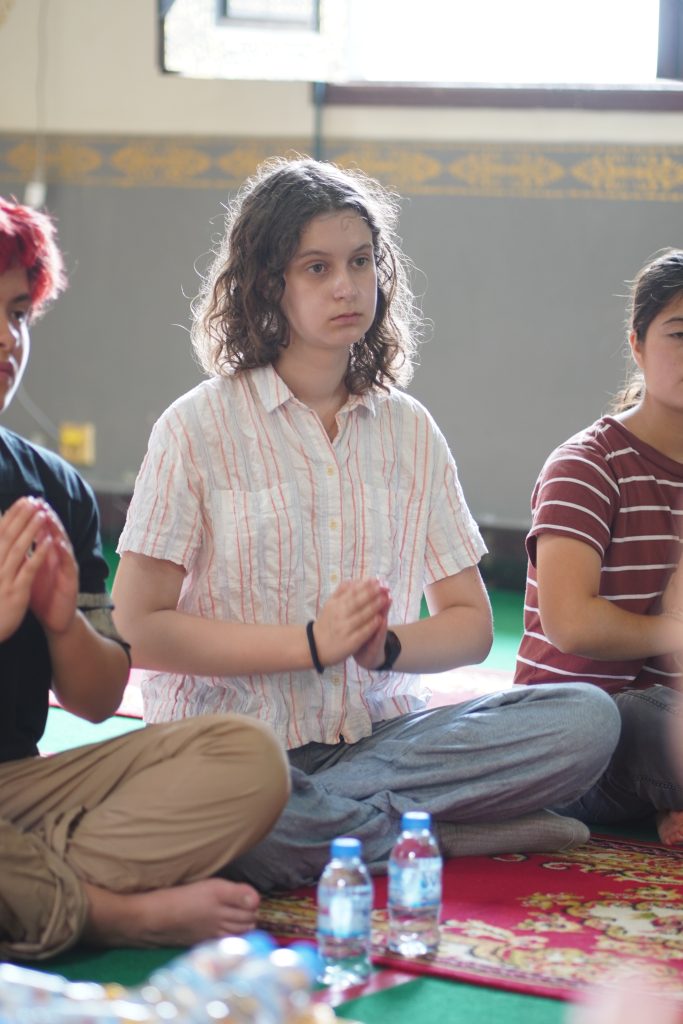
I am very happy to welcome students from the United States and other countries who are interested in coming to Cambodia to learn about Buddhism, meditation, Cambodian culture, and the everyday life of Buddhist monks.
For me, welcoming international students is not simply about teaching them Buddhist ideas from books.
It is about allowing them to experience Buddhism in Cambodia—to see how Buddhist teachings are practiced, how monks live, how people respect monks, how Buddhist traditions are connected to Cambodian families and communities, and how Buddhism has shaped Cambodian culture throughout generations.
When students come to Cambodia, I want them to have the opportunity to ask questions, observe, listen, practice, and experience.
They can learn about Buddhism through conversations with a monk. They can practice meditation. They can learn how Cambodian people show respect through Sompeas. They can learn about the Five Precepts and why these principles remain meaningful in everyday life. They can also learn about the relationship between Buddhist temples, monks, families, education, traditions, and Cambodian communities.
Most importantly, I want them to understand that Buddhism in Cambodia is not only something found inside a temple.
Buddhism is deeply connected with Cambodian life and culture.
On This Page
- My Journey as a Monk
- Why I Welcome International Students
- Buddhism and Cambodian Culture
- Khmer Sompeas
- The Five Precepts
- Meditation Through Experience
- Learning from Cambodia
- Come and Learn Buddhism in Cambodia
My Journey as a Monk
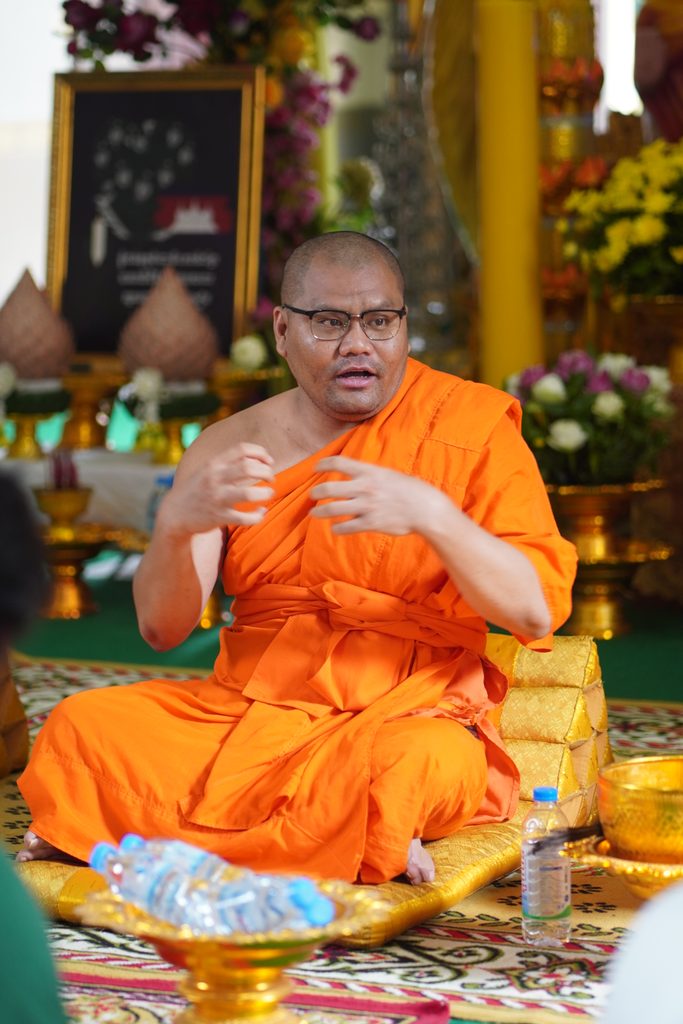
I have been a monk for 13 years.
My journey as a monk has taken me through many different places in Cambodia. I have traveled from province to province and from rural areas to cities, often not for comfort or convenience, but because of education, learning, teaching, and personal development.
Life as a monk has taught me that education is not limited to a classroom.
Sometimes, the journey itself becomes the classroom.
I have experienced different communities, met many different people, stayed in different places, learned from different teachers, and witnessed the different ways Cambodian people live and practice their traditions.
There were times when traveling was not easy.
There was not always comfort.
There were long journeys, simple living conditions, unfamiliar places, and many challenges.
But those experiences became part of my education.
They taught me patience.
They taught me to adapt.
They taught me to appreciate simple things.
They taught me how different communities can have different ways of living while still sharing many of the same values.
And, most importantly, they helped me understand Buddhism not simply as something to study, but as something to live.
Why I Welcome International Students
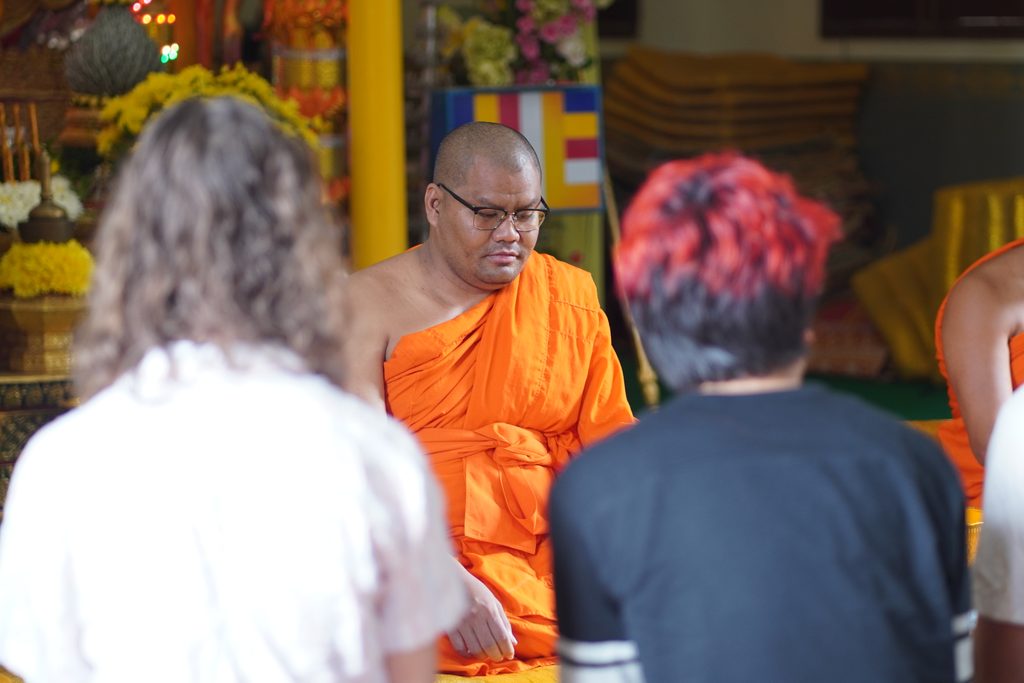
When international students come to Cambodia to learn Buddhism, I do not want them to feel that they are simply visiting a foreign religion.
I want them to feel that they are entering a living culture and beginning a human conversation.
Many students may first become interested in Buddhism because they want to understand meditation, mindfulness, happiness, suffering, or the meaning of life.
These are important questions.
But when they come to Cambodia, they can also discover another important question:
How does Buddhism become part of everyday life?
This is where Cambodia provides a very meaningful learning environment.
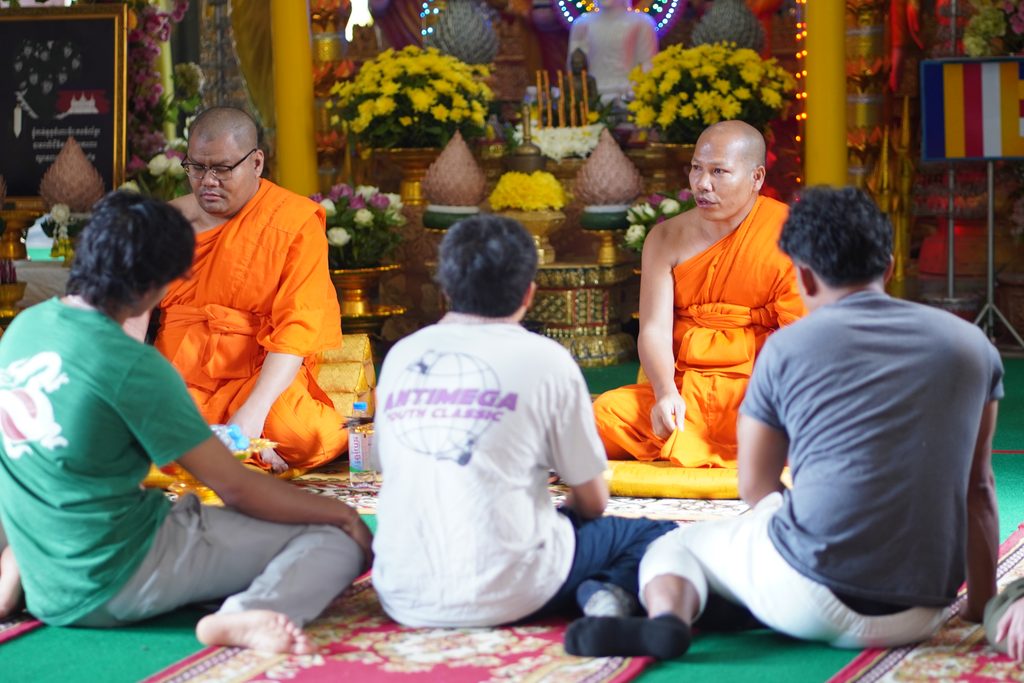
Students can see monks walking through communities, people making offerings, families visiting temples, Buddhist ceremonies, traditional celebrations, meditation practices, and respectful interactions between monks and laypeople.
They can see that Buddhist values are expressed not only through formal teachings but also through everyday actions.
Buddhism and Cambodian Culture Cannot Easily Be Separated
For many Cambodian people, Buddhism is closely connected with family, community, tradition, education, morality, and cultural identity.
Of course, Cambodian culture is diverse and has changed over time. But Buddhism has played a very important role in shaping Cambodian society and continues to influence many aspects of community life.
When we talk about Cambodian culture, we often encounter Buddhist practices.
When we talk about Cambodian Buddhist traditions, we also encounter Cambodian family and community life.
This connection is one of the things I want international students to understand.
You cannot fully understand Cambodian culture without learning about Buddhism, and it is difficult to understand Cambodian Buddhism without understanding something about Cambodian culture and community life.
Khmer Sompeas: A Simple Gesture with a Deep Meaning
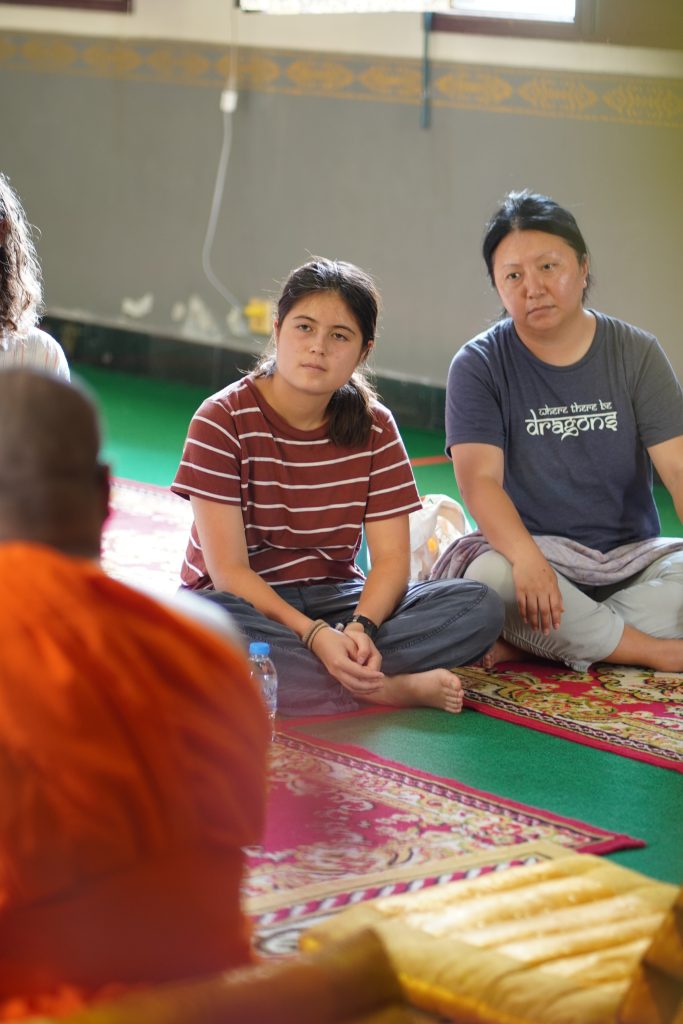
One of the beautiful examples is the Khmer Sompeas.
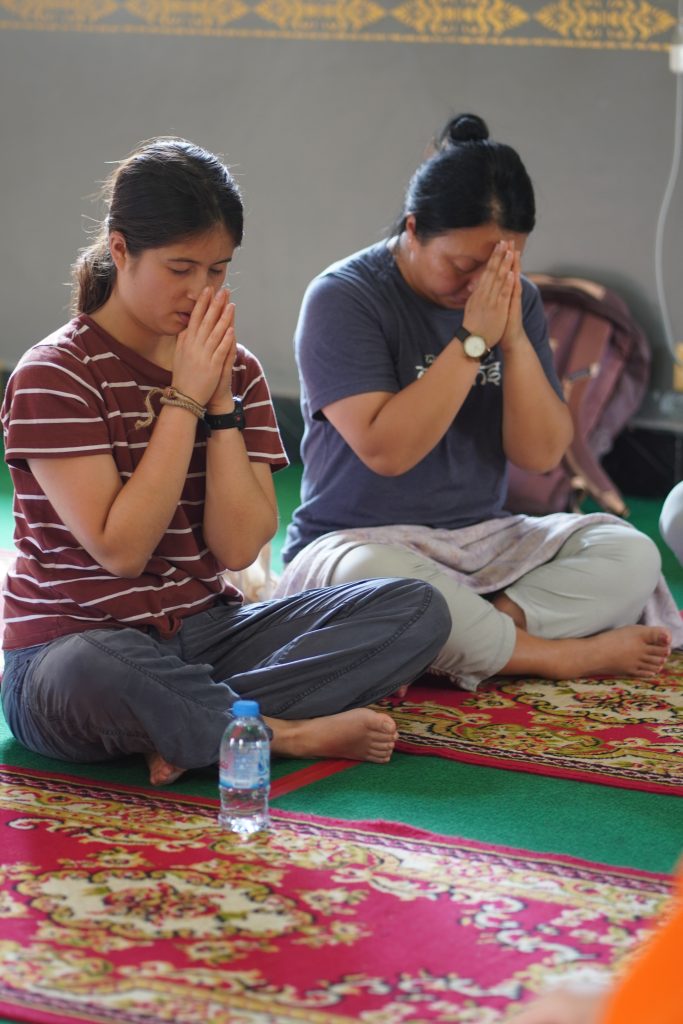
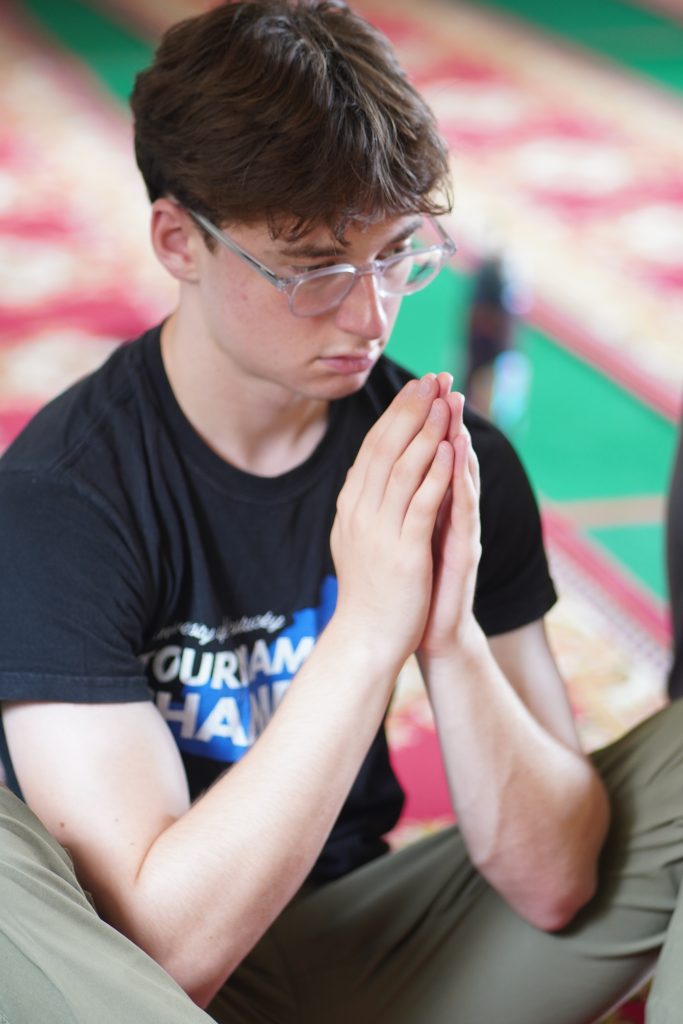
Putting our palms together and showing respect may appear to be a simple gesture.
But it can communicate many things:
- respect
- gratitude
- humility
- politeness
- appreciation
- peacefulness
For Cambodian people, the Sompeas can be part of everyday social interaction as well as religious and cultural occasions.
When students learn the Sompeas, I want them to understand that it is not simply a movement of the hands.
It represents an attitude.
It reminds us that how we treat another person matters.
It reminds us to approach others with respect.
The Five Levels of Khmer Sompeas
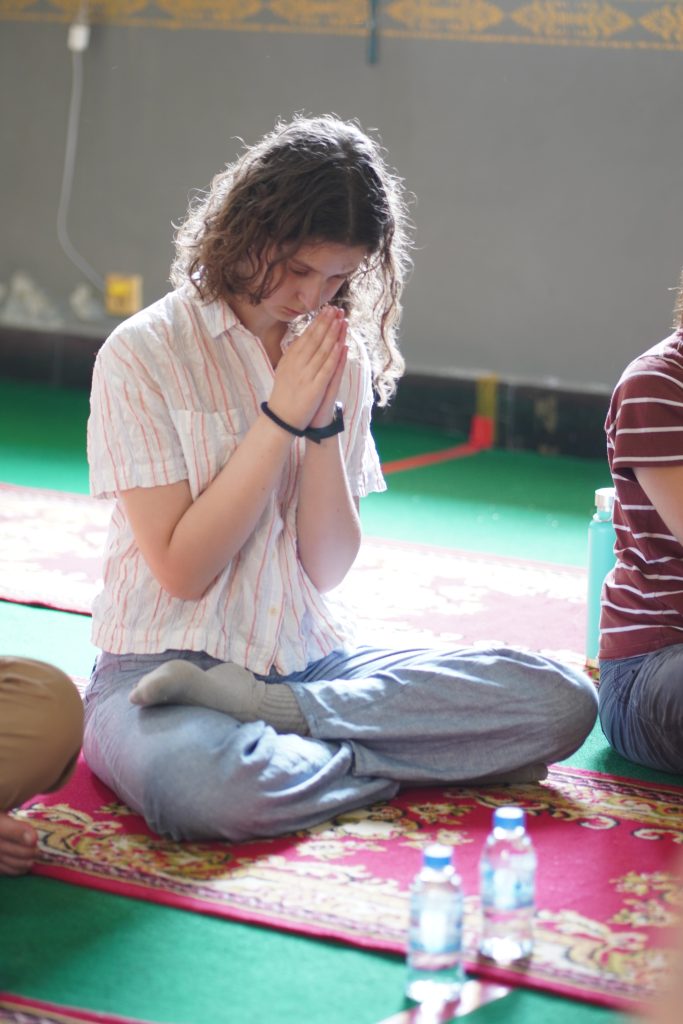
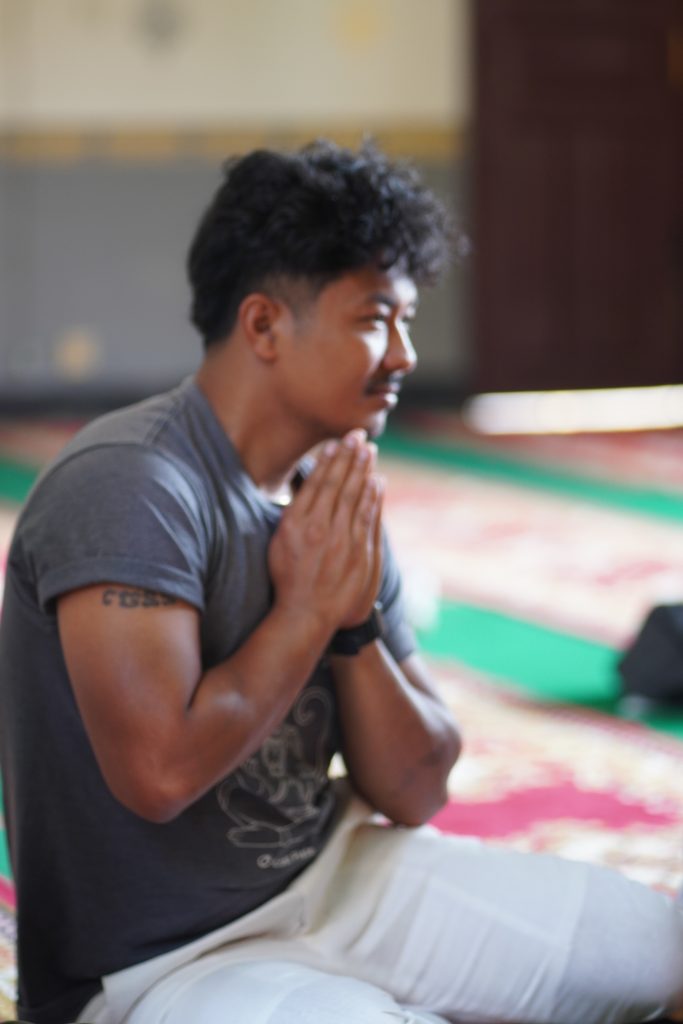
Sompeas (សំពះ) is one of the most recognizable Khmer traditions. It is more than a greeting. It expresses respect, humility, gratitude, politeness, and social harmony.
The hands are placed together like a lotus, and the head is gently bowed. The higher the hands are raised, the greater the respect being expressed.
1. Chest Level — Respect Among Equals
The hands are held together at chest level.
This is commonly used when greeting:
- Friends
- People of similar age
- Colleagues
- People of similar social position
It expresses friendly and polite respect.
2. Mouth Level — Respect for Elders and Seniors
The hands are raised to mouth level.
This is used when greeting:
- Older people
- Someone in a higher position
- A boss or senior person
- Someone whom we want to show greater respect
3. Nose Level — Deep Respect
The hands are raised to nose level.
Traditionally, this is used by:
- Children toward parents and grandparents
- Students toward teachers
- Younger people toward highly respected elders
It expresses a deeper level of respect and gratitude.
4. Eyebrow Level — Respect for Monks and the King
The hands are raised to eyebrow level.
Traditionally, this level is associated with showing profound respect to:
- Buddhist monks
- The King
- Other highly revered persons in the traditional social order
For your website, this is particularly important because it helps international students understand why Cambodian people Sompeas monks at a higher level.
5. Above the Eyebrows — Veneration of the Buddha and Sacred Objects
The hands are raised above the eyebrow/forehead level.
This is associated with:
- The Buddha
- Buddha images
- Sacred objects
- Religious worship and prayer
This is the highest level and expresses deep reverence and devotion, rather than an ordinary social greeting.
And this connects naturally with Buddhist teachings about our actions, speech, intentions, and relationships with other people.
The Five Precepts: Buddhism in Everyday Life
Another important teaching I share with students is the Five Precepts.
The Five Precepts are practical ethical principles that encourage us to live responsibly and peacefully.
They encourage us to:
- Refrain from harming living beings.
- Refrain from taking what is not given.
- Practice responsible conduct in relationships.
- Refrain from false and harmful speech.
- Refrain from intoxicants that lead to carelessness.
For me, the Five Precepts are not simply rules that students memorize.
They are questions for everyday life.
How do I treat other people?
How do I use my words?
How do I respond when I am angry?
How do I make decisions when nobody is watching?
How can my actions create peace rather than suffering?
These questions make Buddhist teachings practical.
This is one of the things I hope international students will discover: Buddhism is not only about learning terminology or memorizing teachings.
It is also about looking carefully at our own lives.
Buddhism Through 4H: Help, Heal, Hope, and Harmony
One simple way I like to express the spirit of Buddhism is through four words:
Help
We can help others through kindness, generosity, understanding, education, and service.
Sometimes a person does not need a complicated answer.
Sometimes they simply need someone to listen.
Heal
Life brings suffering, disappointment, loss, confusion, and emotional pain.
Buddhist teachings can help us understand suffering and develop a wiser relationship with it.
Healing does not always mean removing every difficulty.
Sometimes healing begins when we learn to understand our experience instead of running away from it.
Hope
Buddhism teaches us that our present situation does not have to define our entire future.
Through awareness, ethical action, wisdom, and practice, we can change how we respond to life.
That gives us hope.
Harmony
When we understand ourselves better, we can begin to understand others better.
When we learn to control anger, speak carefully, listen deeply, and respect differences, we create more harmony in our families, communities, and societies.
For me, these four words provide a simple way to communicate the human value of Buddhist practice:
Help. Heal. Hope. Harmony.
The Important Role of Monks in Cambodian Communities
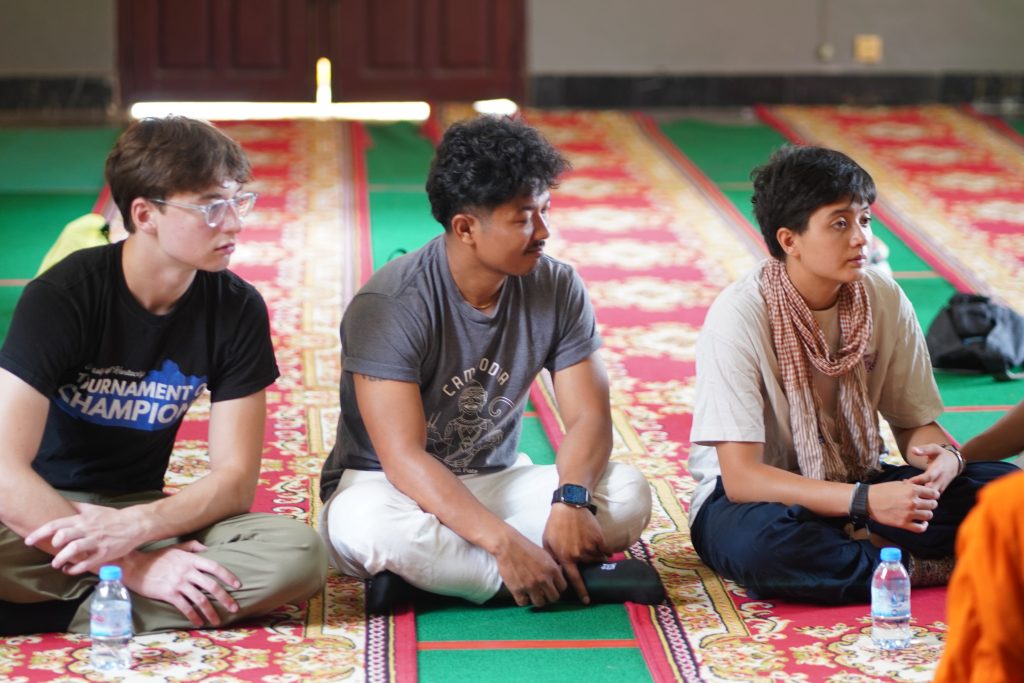
I also want international students to understand why monks have traditionally held an important place in Cambodian communities.
Historically, Buddhist monks have been connected with many aspects of community life.
Temples have served not only as religious spaces but also as places where people gather, learn, celebrate important occasions, seek advice, practice generosity, and maintain traditions.
For generations, monks have played roles in religious education, moral guidance, ceremonies, community activities, and the preservation of Buddhist traditions.
The relationship between monks and lay communities is therefore an important part of understanding Cambodian society.
Today, Cambodian society is changing rapidly.
Education, technology, cities, migration, social media, and globalization are changing the way people live.
But the relationship between Buddhism, monks, families, and communities remains meaningful for many Cambodian people.
I believe monks can continue to contribute—not only through traditional religious teachings, but also through education, mindfulness, compassion, dialogue, and community service.
What I Share with International Students
When students visit and learn with me, I want to share more than Buddhist theory.
I want to share a real experience.
We can talk about:
- What is the daily life of a monk like?
- Why do people become monks?
- What does a monk study?
- What does a monk do every day?
- How do monks meditate?
- How do monks interact with Cambodian communities?
- Why do Cambodian people respect monks?
- What are the Five Precepts?
- What is Khmer Sompeas?
- How does Buddhism influence Cambodian traditions?
- What happens inside a Cambodian Buddhist temple?
- How can meditation help us understand our minds?
- What is the relationship between Buddhism and Cambodian culture?
- How can Buddhist teachings be applied to modern life?
- What can international students learn from Cambodian Buddhist communities?
And, of course, students are welcome to ask their own questions.
Sometimes the best learning begins with a simple question.
Meditation: Learning Through Experience
Meditation is another important part of what I share.
Students can learn about mindfulness and meditation not only by listening to explanations but by practicing.
Meditation gives us an opportunity to become more aware of the body, feelings, thoughts, and mental habits.
For international students, practicing meditation in a Cambodian Buddhist environment can also provide a different perspective from learning meditation only through books or online courses.
The purpose is not to create a perfect meditation experience.
The purpose is to learn how to observe.
To slow down.
To become aware.
To understand the mind.
And to gradually develop greater wisdom and compassion.I welcome both Cambodian students and international students to learn and practice together.
Learning from Cambodia, Learning from Each Other
One thing I have learned during my 13 years as a monk is that teaching is not only about giving knowledge.
A teacher also learns from students.
When international students ask questions about Buddhism, they sometimes make me look at familiar things from a new perspective.
Their questions can help us discover what we have taken for granted.
Their experiences are different.
Their cultures are different.
Their ways of thinking may be different.
But human beings also share many of the same questions.
We all experience happiness and sadness.
We all experience relationships.
We all experience uncertainty.
We all want to understand ourselves.
We all experience change.
We all search for meaning in different ways.
This is why I believe that Buddhism can become a bridge between cultures.
My Hope for International Students
My hope is that students who come to Cambodia will leave with more than photographs.
I hope they leave with understanding.
I hope they understand something about Buddhist teachings.
I hope they experience meditation.
I hope they understand why Cambodian people show respect to monks.
I hope they discover the meaning behind traditions.
I hope they see how Buddhism has influenced Cambodian culture.
I hope they understand that behind every tradition there are people, stories, history, values, and human experiences.
And perhaps most importantly, I hope they take something home that can be applied to their own lives.
A little more patience.
A little more awareness.
A little more compassion.
A little more understanding.
Come and Learn Buddhism in Cambodia
If you are a student from the United States or another country and you are interested in learning about Buddhism, meditation, Cambodian culture, and the life of a Buddhist monk, you are warmly welcome.
You do not need to know everything about Buddhism before you come.
You do not need to be Buddhist.
You do not need to have experience with meditation.
Come with curiosity.
Come with respect.
Come ready to ask questions.
Come ready to listen.
Come ready to experience.
Through conversation, meditation, cultural learning, and time spent in a Cambodian Buddhist environment, I hope we can learn from one another.
Buddhism is not only something to read.
Culture is not only something to watch.
Learning is not only something to receive.
Sometimes, the deepest learning comes from being present, meeting people, asking questions, and experiencing life together.
Learn. Reflect. Practice. Share.
After 13 years as a monk, my journey continues.
I continue to learn.
I continue to travel.
I continue to teach.
I continue to meet people from different backgrounds.
And I continue to discover how Buddhist wisdom can help us live with greater understanding, kindness, and wisdom.
I welcome you to Cambodia.
I welcome you to learn about Buddhism.
I welcome you to practice meditation.
I welcome you to explore Cambodian culture.
And I welcome you to share your own questions and experiences.
Let us learn from Buddhism.
Let us learn from Cambodia.
Let us learn from one another.
Help. Heal. Hope. Harmony.
— Pov Socheat
Buddhist Monk & Educator
Pov Socheat Buddhism & Life