


Exploring Phnom Tevak and Khmer Spiritual Heritage
In this article, we explore Phnom Tevak, Buddhism in Cambodia, Khmer spiritual heritage, and the relationship between culture, history, and nature.
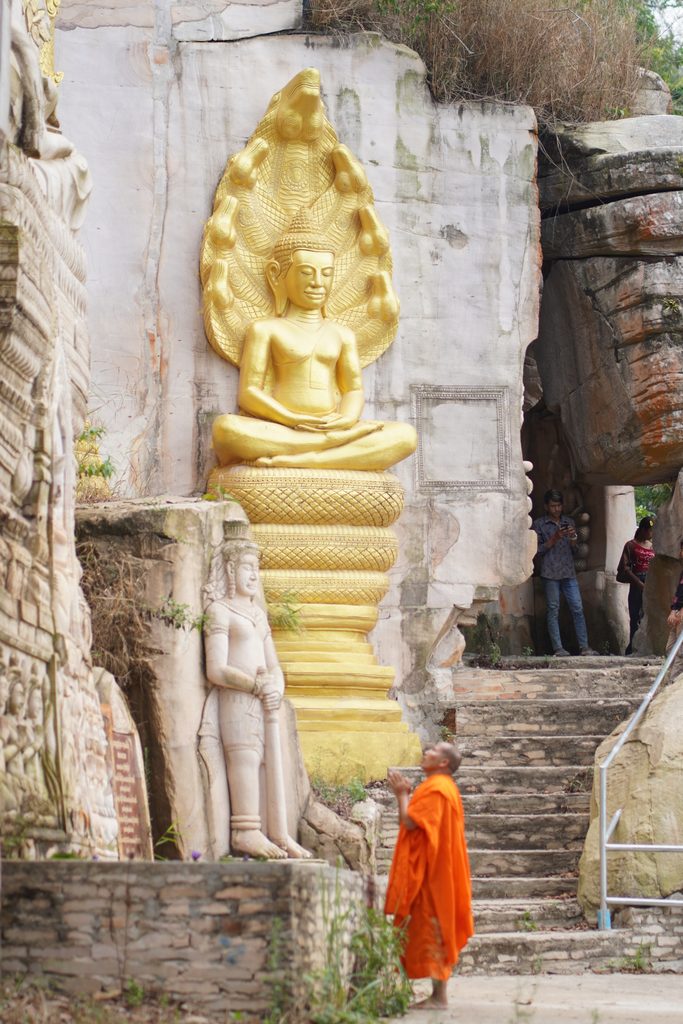
Deep in the natural landscape of Kirirom Mountain, Cambodia, there is a special place known as Phnom Tevak, a name that can be understood as “Deva Mountain” or “Mountain of the Gods.”
I had the opportunity to visit this place and take these photographs myself.
What interested me most was not only the beauty of the sculptures and the surrounding forest, but also the stories represented through the stone.
A Place Where Stories Are Carved in Stone
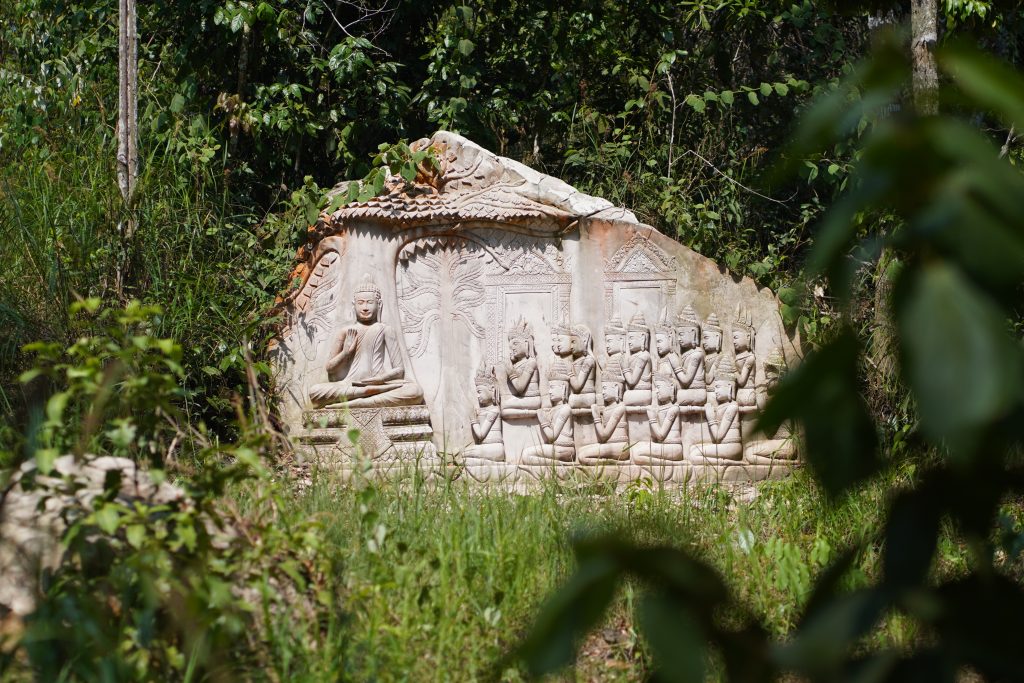
According to the local story I learned about Phnom Tevak, the cave was developed with two sides.
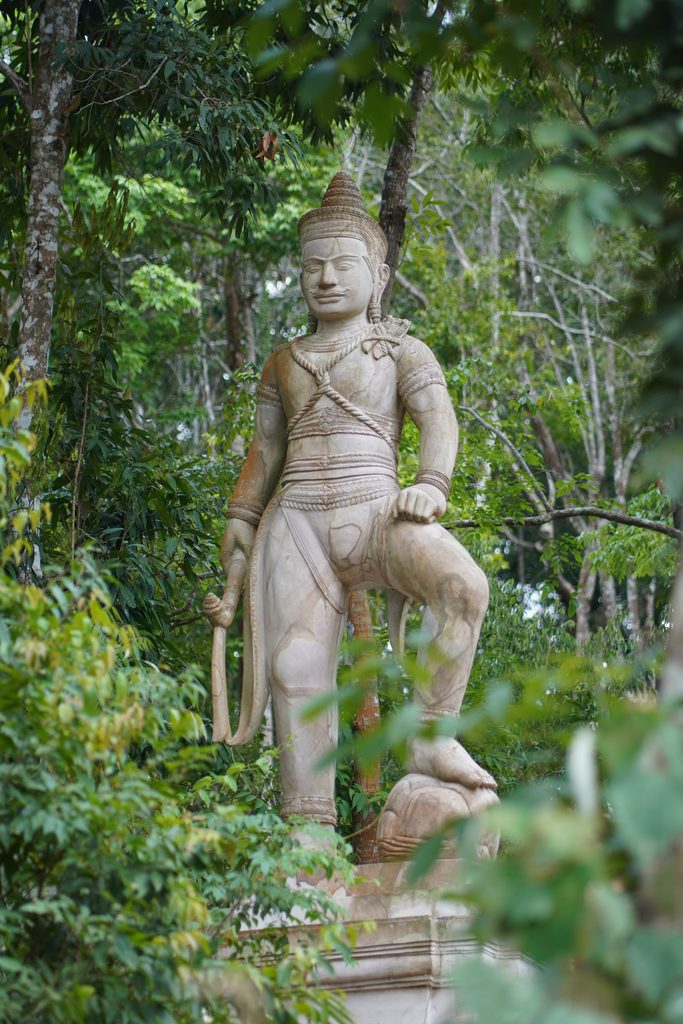
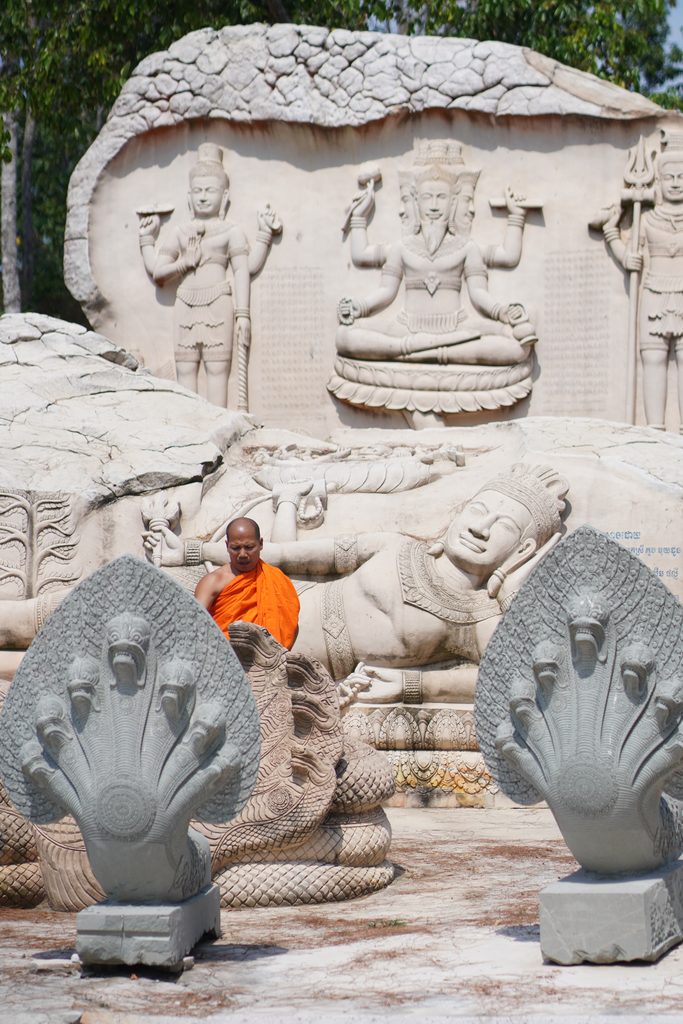
One side represents Hindu gods and stories, while the other represents Buddhist stories and images of the Buddha. Standing among these sculptures, I found myself thinking about how many layers of Cambodian culture have been shaped by spiritual traditions over centuries.
The stones are not simply objects of art.
They tell stories.
They represent beliefs.
And they give us a glimpse into the ways people have expressed their understanding of life, spirituality, suffering, compassion, and the world around them.
Buddhism and Hinduism in Khmer Culture
When we look at Cambodian history and culture, we can see influences from both Hindu and Buddhist traditions.
For many visitors, seeing Hindu and Buddhist imagery together in one place may seem surprising.
But for me, it is an opportunity to learn rather than to separate.
Different traditions may have different teachings, stories, and practices, but they can also exist within the same cultural landscape.
The sculptures at Phnom Tevak reminded me that Khmer heritage cannot always be understood through only one religious or cultural lens.
It is a story shaped by many generations.
Related Reading
- Cultural Events and Festivals Celebrating Buddhism in Cambodia
- Learning Buddhism in Cambodia: Monastic Life, Culture & Meditation
- From Conversation to Stillness: A Meditation Experience in Cambodia
The Buddha Among the Forest
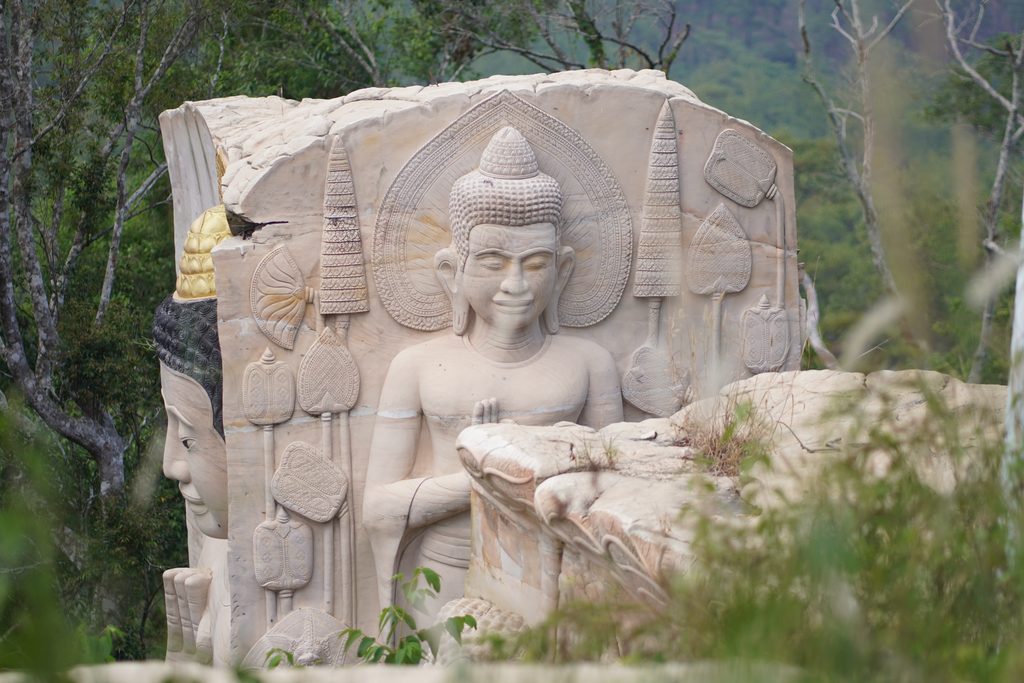
One of the things I found especially beautiful about Phnom Tevak was the relationship between the sculptures and nature.
The Buddha images are not displayed in a modern gallery.
They are surrounded by trees, rocks, leaves, mountains, and the quiet atmosphere of the forest.
This creates a different experience.
When I stood there, I did not feel that I was simply looking at a statue.
I felt that I was looking at a story that had been placed within nature.
The forest itself seemed to become part of the experience.
Perhaps this is one reason places like this can make us slow down.
We look.
We listen.
We become quiet.
And sometimes, when we become quiet, we begin to notice what is happening inside our own minds.
The Meaning Behind the Images
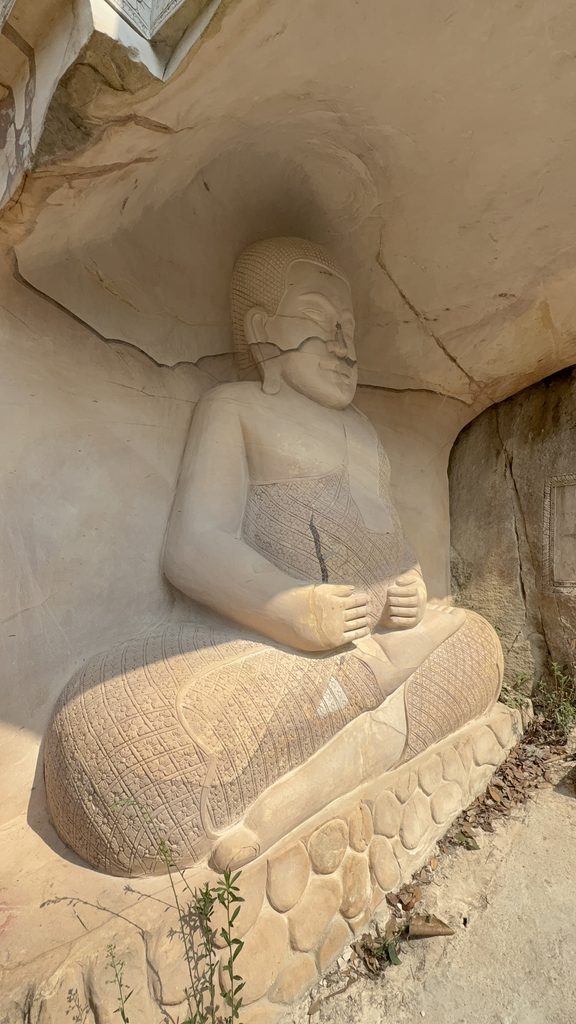
Among the sculptures are different representations of Buddhist stories and the Buddha.
There are images of meditation, teaching, and peaceful contemplation.
There are also scenes that invite us to think about the journey of the Buddha and the values that Buddhism continues to teach today.
For me, the most important question is not only:
“What story does this sculpture represent?”
Another question is:
“What can this story teach us about our own lives?”
A sculpture of the Buddha sitting peacefully may remind us about the value of stillness.
A story about suffering may remind us that suffering is part of human life.
A story about compassion may remind us to be kinder to others.
In this way, ancient stories can still speak to modern people.
Why This Place Matters to Me
Phnom Tevak is more than a place I visited.
It became a place where I could reflect on religion, culture, history, art, nature, and human life.
As a Cambodian, I also find something meaningful in seeing Khmer spiritual stories represented within the natural landscape of our country.
Places like this remind us that cultural heritage is not only something we read about in books.
Sometimes, we can walk through it.
We can see it.
We can touch the stones.
We can stand quietly beside it.
And we can ask ourselves what these stories mean for us today.
Preserving Stories for the Next Generation
Places connected with cultural and spiritual heritage deserve care and respect.
The sculptures may be made of stone, but the stories they carry are part of something much more fragile: memory.
If we do not learn about these places, future generations may see only old stones and statues.
But if we take the time to understand them, we may see something much deeper—a connection between people, beliefs, art, history, and the land.
Preserving heritage therefore means more than preserving physical objects.
It also means preserving the stories and meaning behind them.
A Quiet Lesson from Phnom Tevak
My visit to Phnom Tevak left me with a simple thought:
We should not only visit places. We should learn from them.
A mountain can teach us about nature.
A sculpture can teach us about history.
A Buddhist story can teach us about the mind.
And a quiet moment in the forest can teach us to slow down.
Perhaps that is one of the beautiful things about travelling to places connected with spirituality and heritage.
We arrive as visitors.
But we may leave with a question.
And sometimes, a good question is the beginning of learning.
My Reflection
As I looked at these photographs again, I thought about how different generations have used stories, sculptures, and sacred places to express their understanding of life.
Phnom Tevak reminded me that culture is not something that belongs only to the past.
It can still invite us to learn, reflect, and understand one another today.
For me, this is what makes the journey meaningful.
Learn. Reflect. Practice. Share.
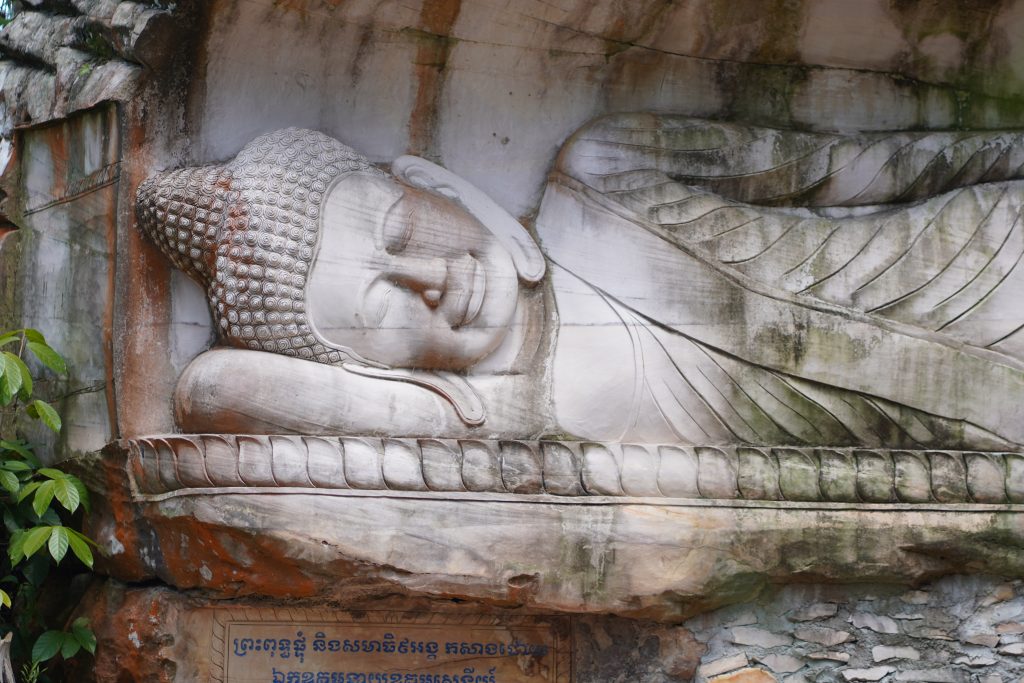
These photographs were taken by me during my visit to Phnom Tevak at Kirirom Mountain, Cambodia.The photographs capture Buddhist sculptures, spiritual imagery, and the natural surroundings of the site.


