


In a world where children are surrounded by information, technology, activities, and constant movement, sometimes one of the most valuable things we can give them is something very simple:
A quiet moment.
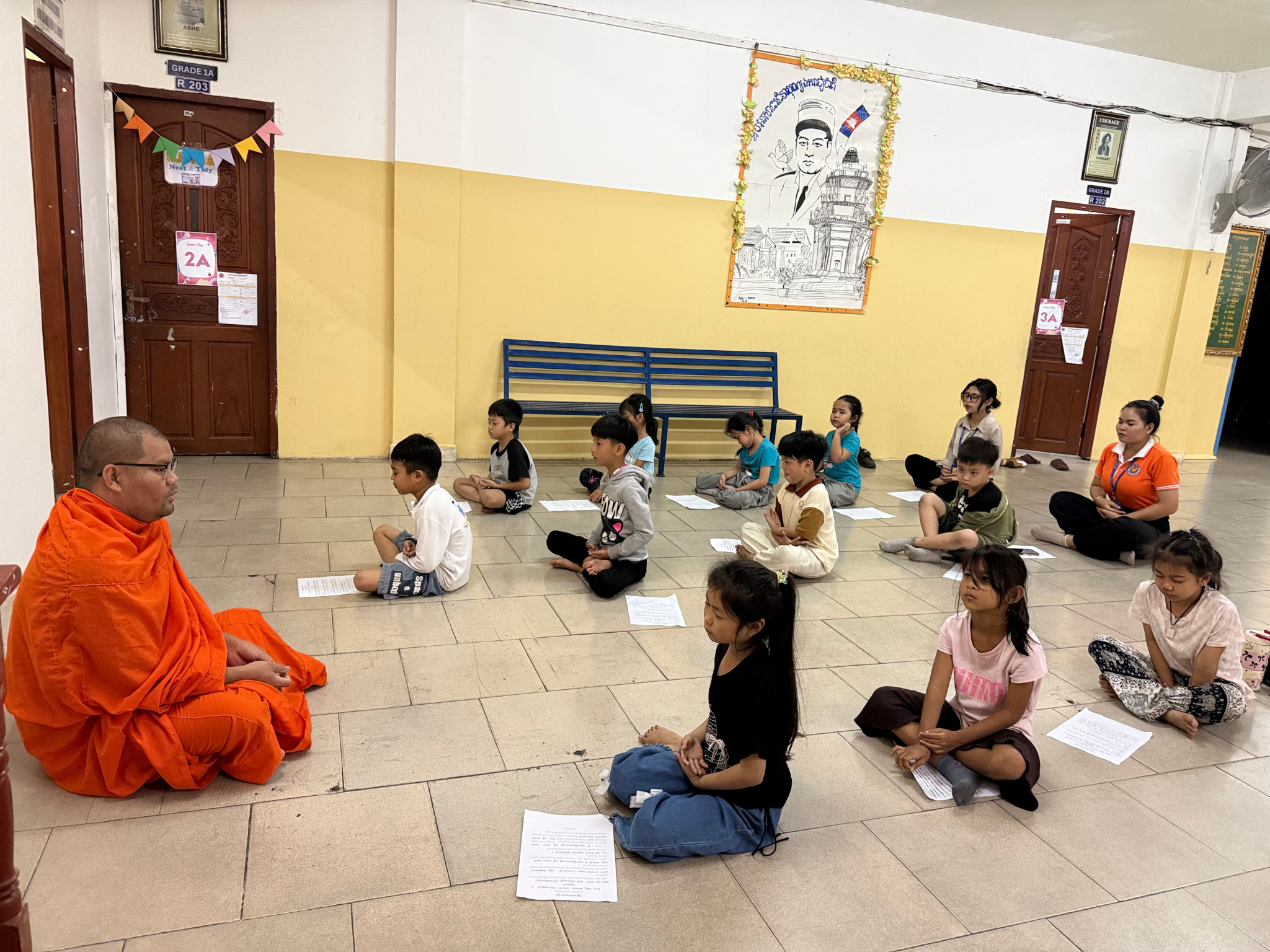
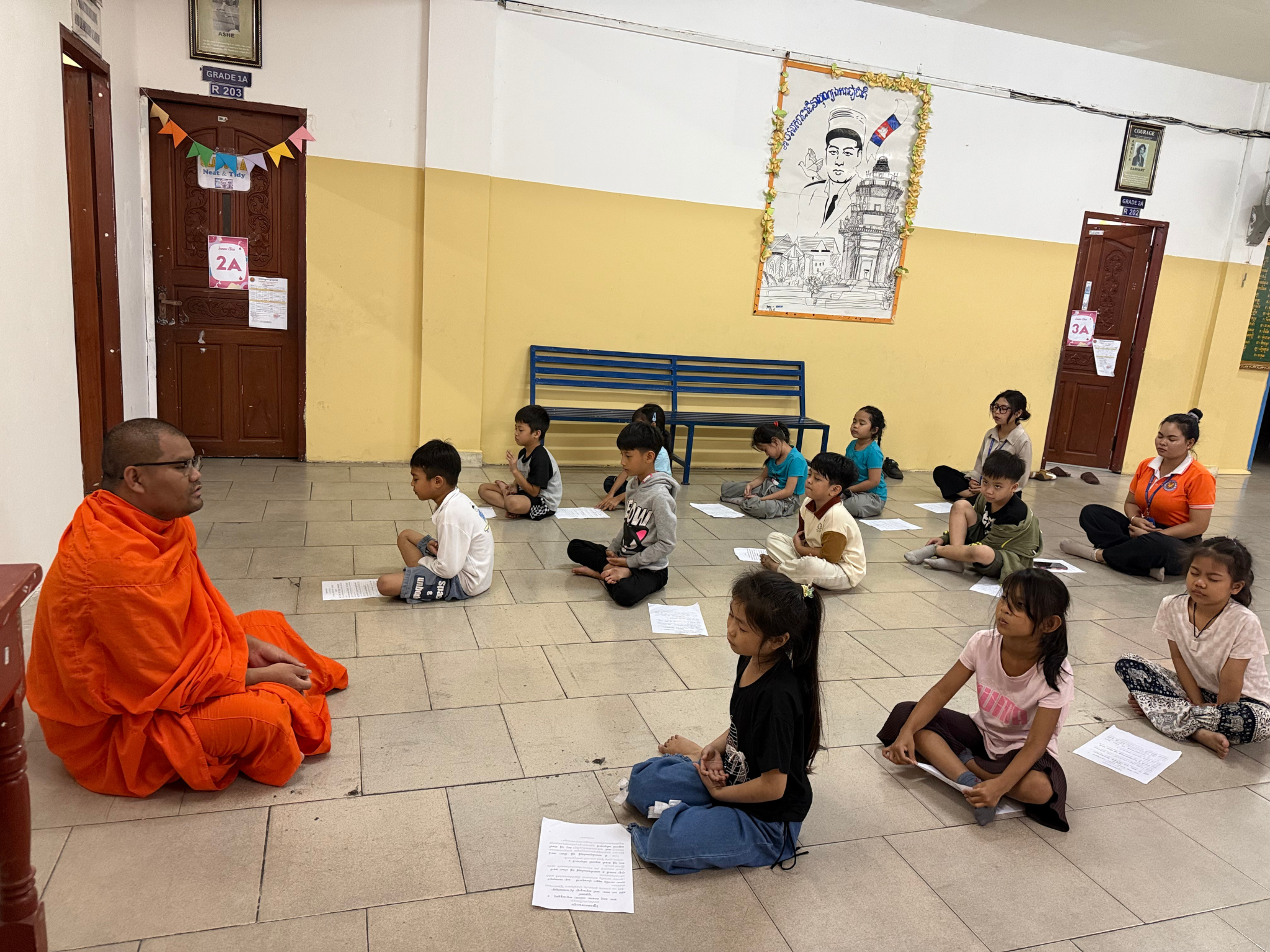
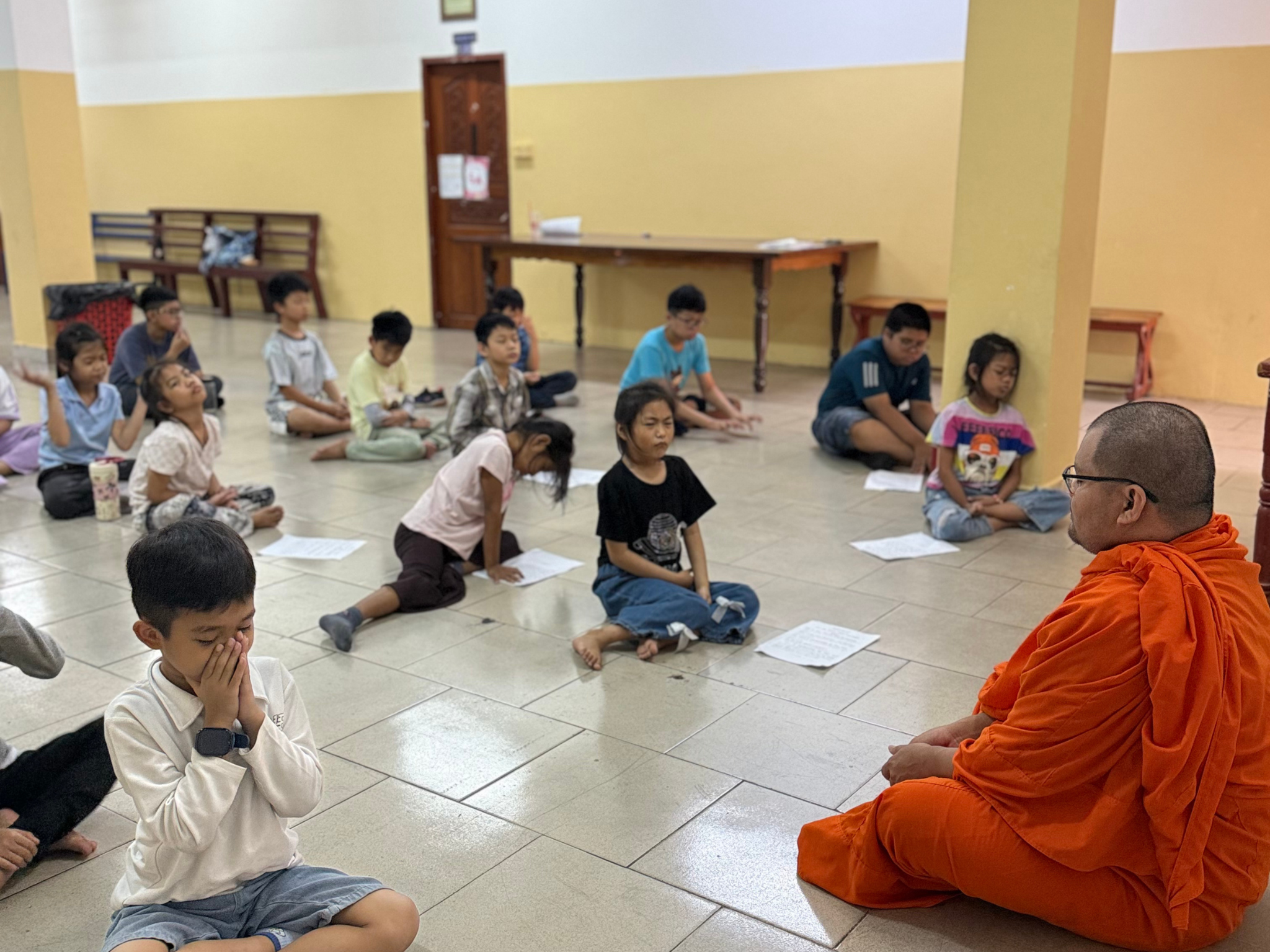
Recently, I had the opportunity to meet with a group of children and introduce them to some simple ideas about Buddhism, mindfulness, and meditation. We talked together, shared ideas, and created a space where they could ask questions and learn.
After our conversation and presentation, we moved from learning about mindfulness to experiencing it directly through meditation.
On This Page
- From Conversation to Stillness
- Meditation Is Not Only for Monks
- What Can Children Learn from Mindfulness?
- Learning Through Experience
- Bringing Buddhist Wisdom Into Everyday Life
- Meditation and Education
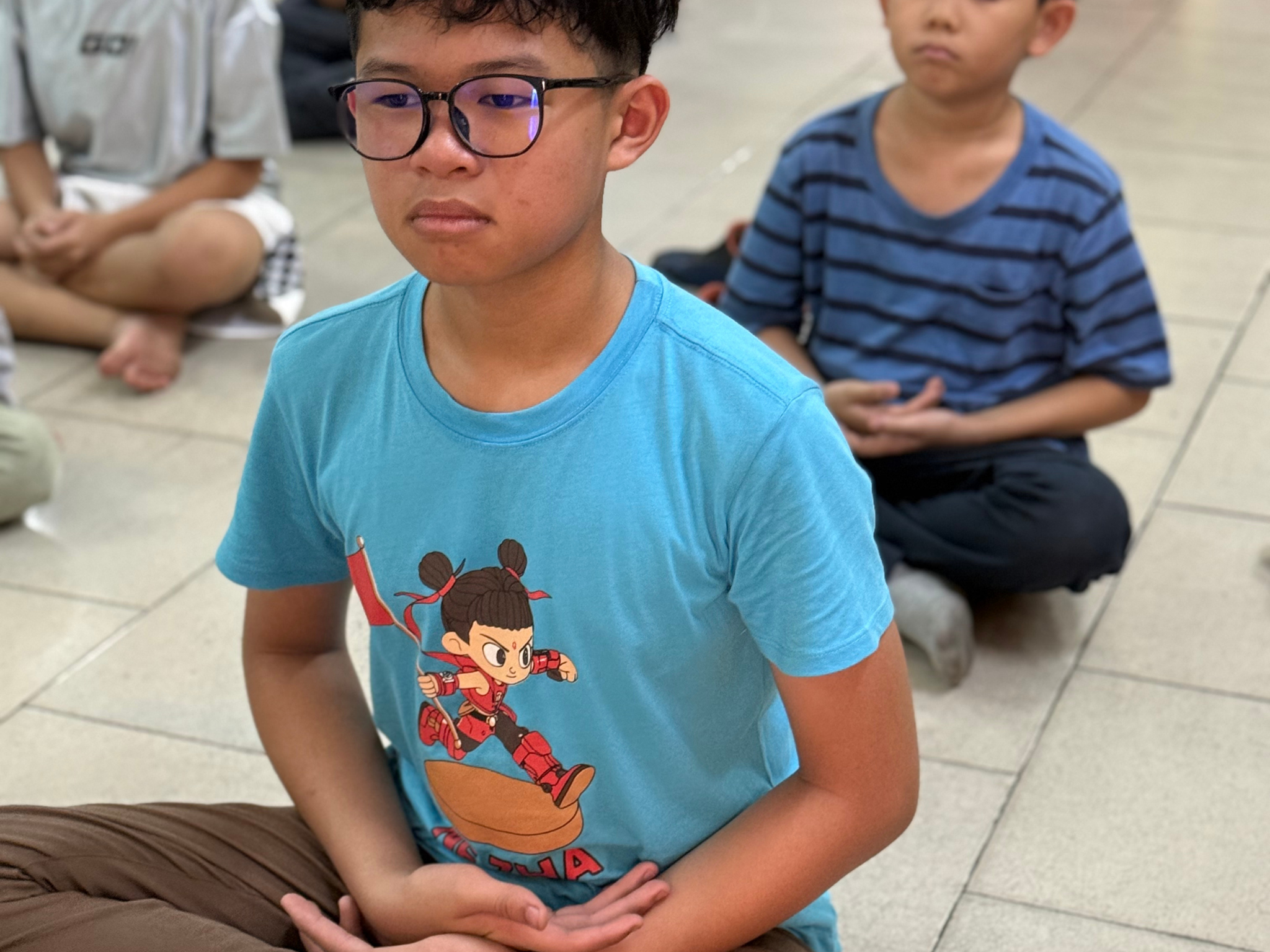
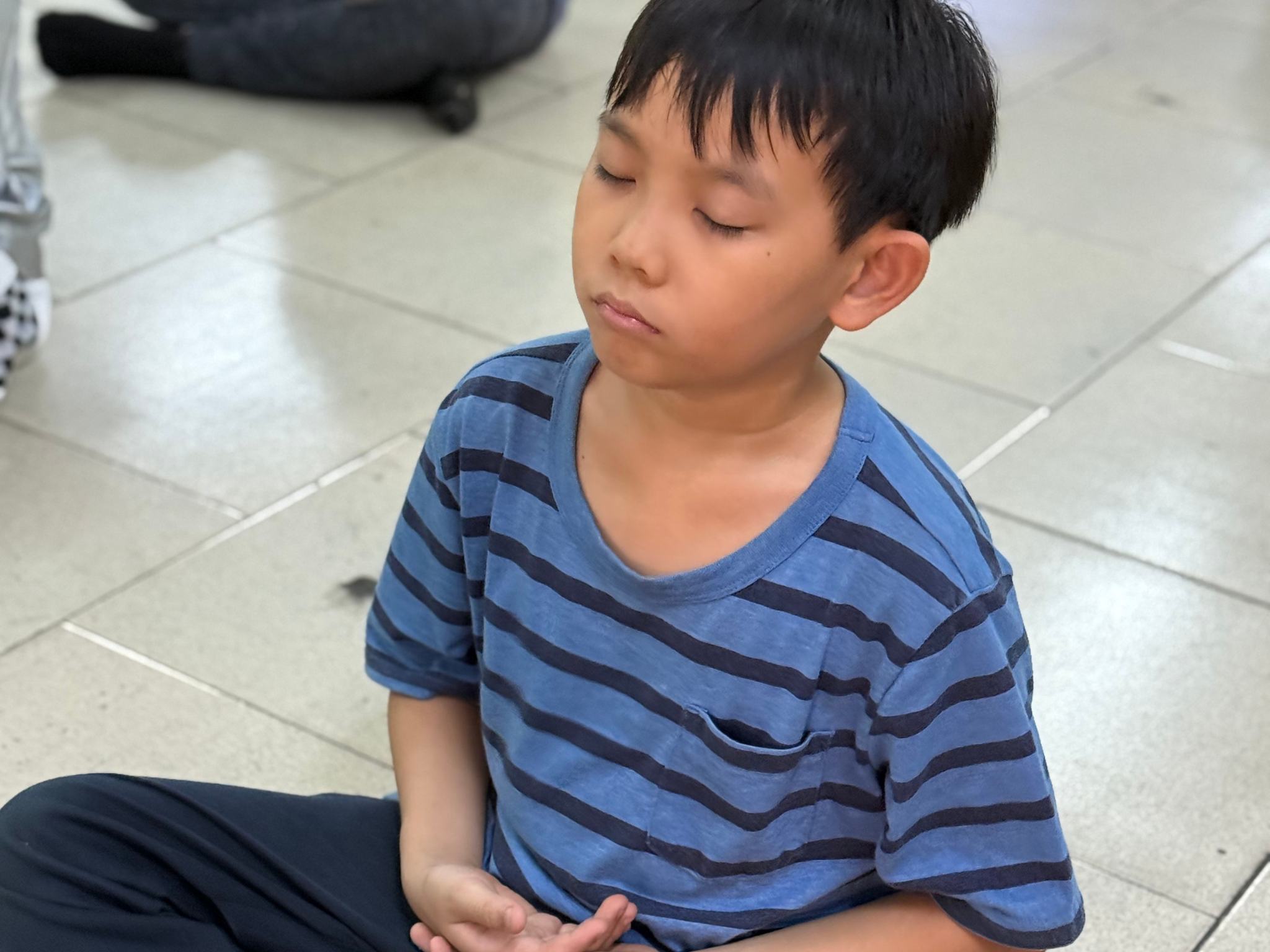
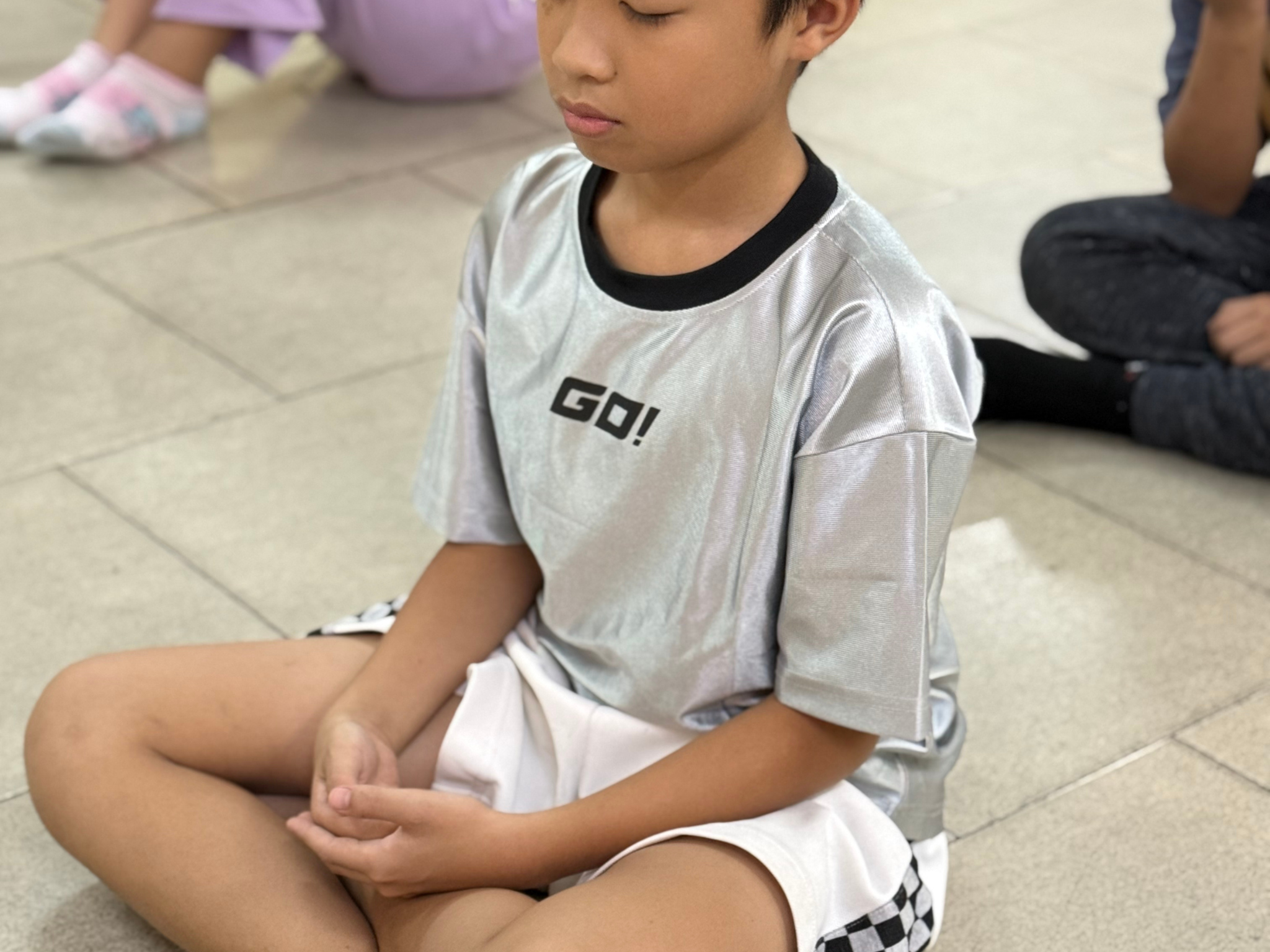
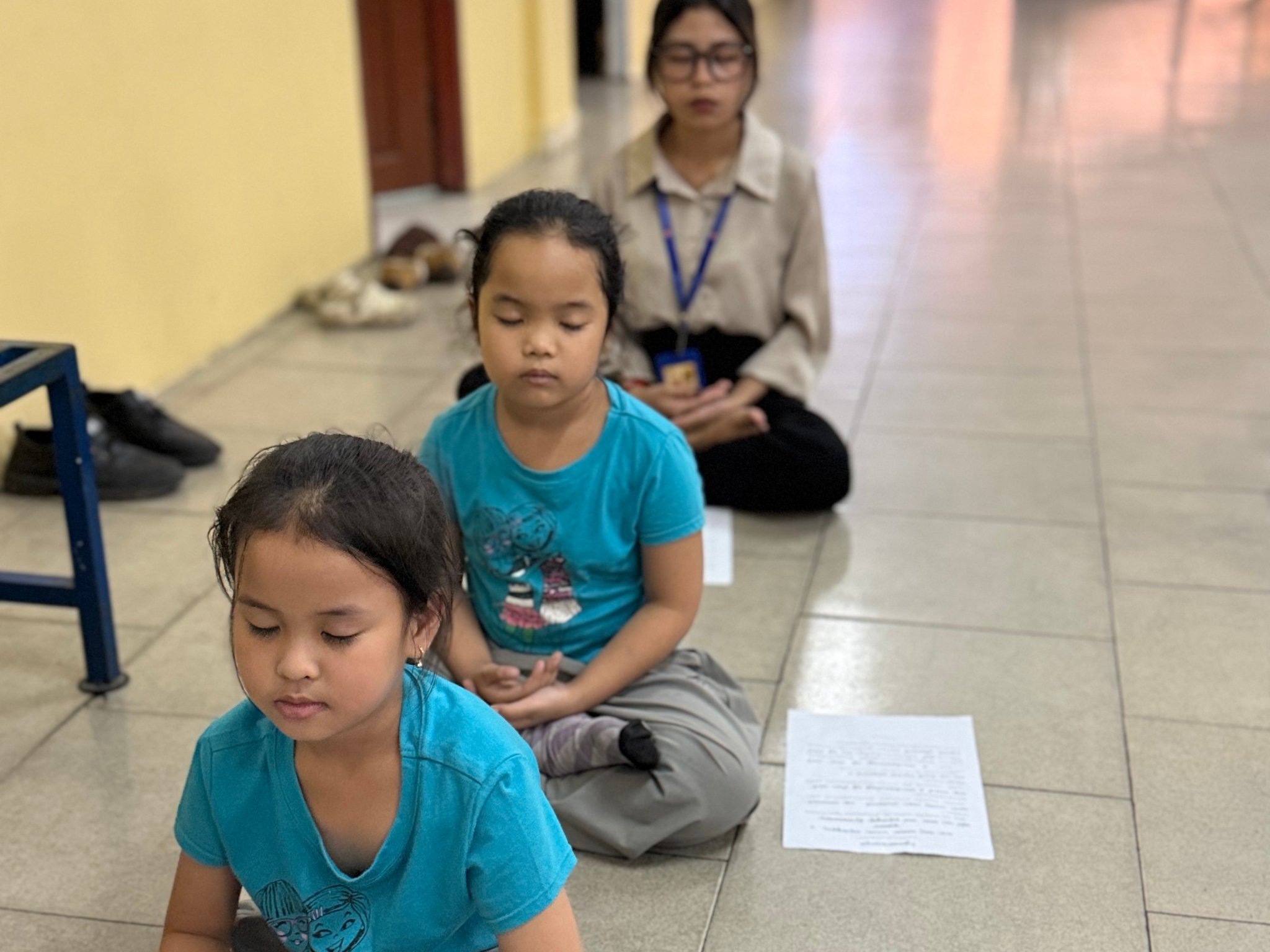
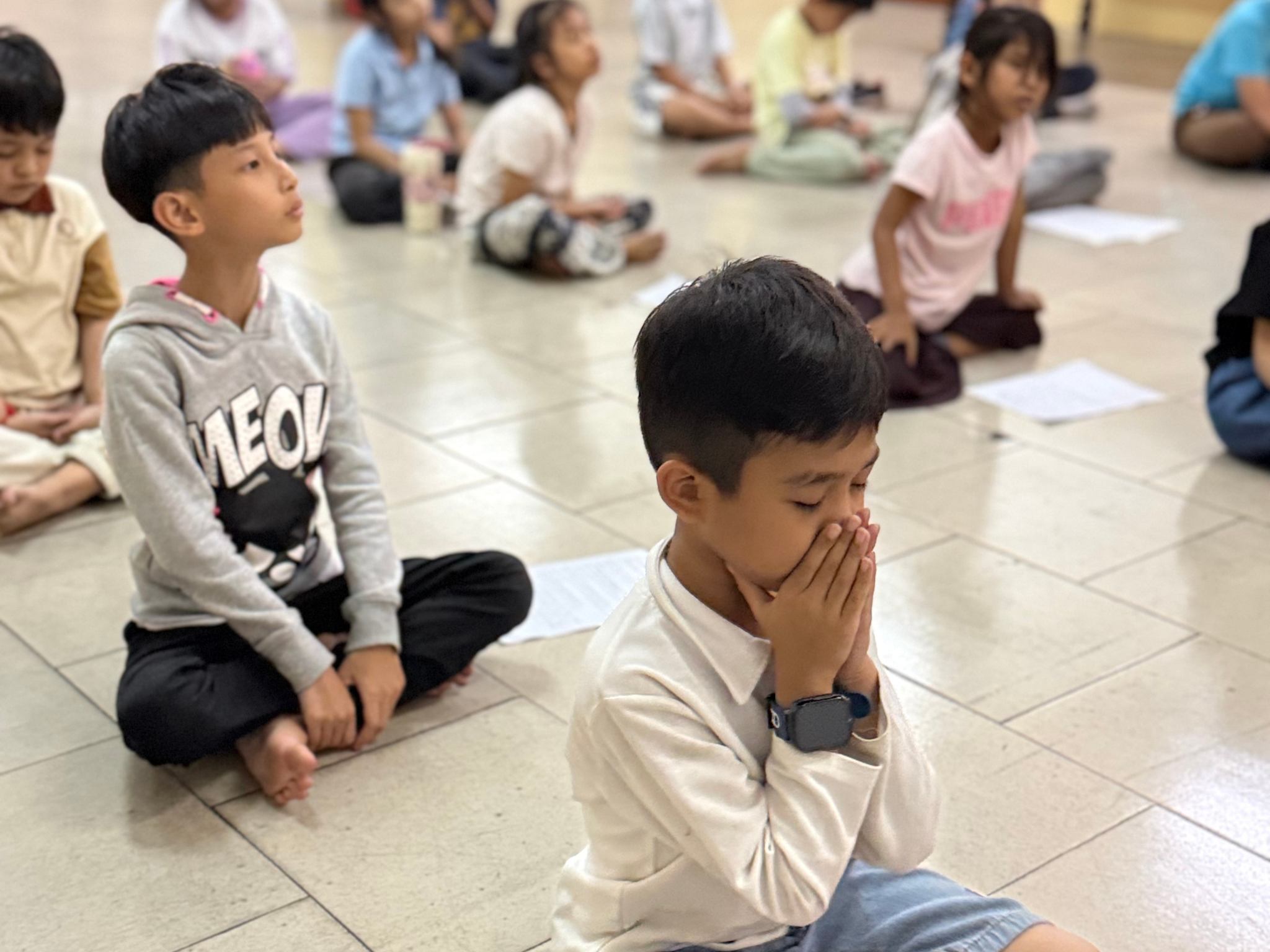
The children sat quietly, closed their eyes, relaxed their bodies, and began to pay attention to their breathing.
For some, being still may have been a new experience.
But that is where the learning begins.
From Conversation to Stillness
When we teach children, we often think about giving them knowledge.
We teach them how to read, write, calculate, communicate, and understand the world around them.
These things are important.
But children also need opportunities to understand themselves.
What happens when I become angry?
What happens when I feel worried?
Why does my mind become distracted?
How can I calm myself?
How can I listen carefully?
How can I be patient with others?
Mindfulness gives children an opportunity to begin exploring these questions.
Meditation does not require complicated ideas. We can begin with something as simple as noticing the breath.
Breathe in.
Breathe out.
Notice.
Pause.
Begin again.
Meditation Is Not Only for Monks
Many people associate meditation with monks, temples, or long periods of sitting quietly.
But mindfulness can also be introduced in simple and appropriate ways to children.
A child does not need to meditate for a long time to begin learning.
Even a few quiet minutes can teach an important lesson:
“I can stop and notice what is happening inside me.”
That small ability to pause can become very meaningful as children grow.
Before reacting, they can learn to pause.
Before speaking, they can learn to listen.
When they become frustrated, they can learn to recognize their feelings.
When they are distracted, they can gently bring their attention back.
These are simple practices, but they can become important life skills.
What Can Children Learn from Mindfulness?
Through simple meditation and mindfulness practices, children can gradually develop:
- Attention — learning to focus on what they are doing.
- Patience — learning that not everything needs an immediate reaction.
- Self-awareness — recognizing thoughts, feelings, and emotions.
- Calmness — creating a moment of quiet when the mind feels busy.
- Compassion — becoming more aware of themselves and others.
- Respect — learning to listen and be present.
- Understanding — beginning to see how thoughts and emotions influence actions.
Meditation is not about forcing children to become perfectly quiet.
It is about helping them notice.
If their mind wanders, they can notice.
If they feel uncomfortable, they can notice.
If they become distracted, they can notice and gently return to the practice.
That itself is learning.
Learning Through Experience
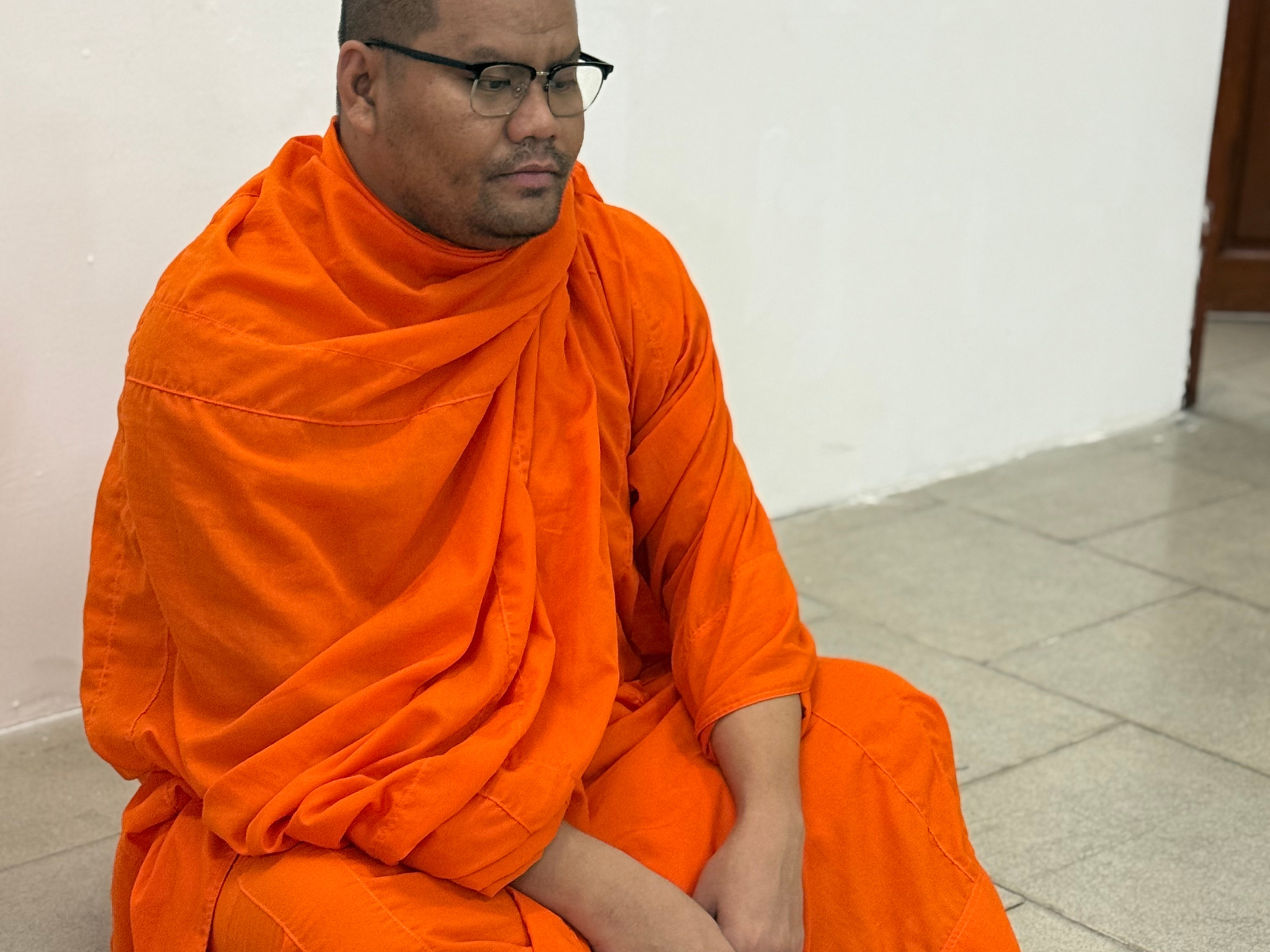
One thing I value deeply as a monk and educator is the difference between hearing about something and experiencing it.
We can explain mindfulness for an hour.
But sometimes one quiet moment can teach something that many words cannot.
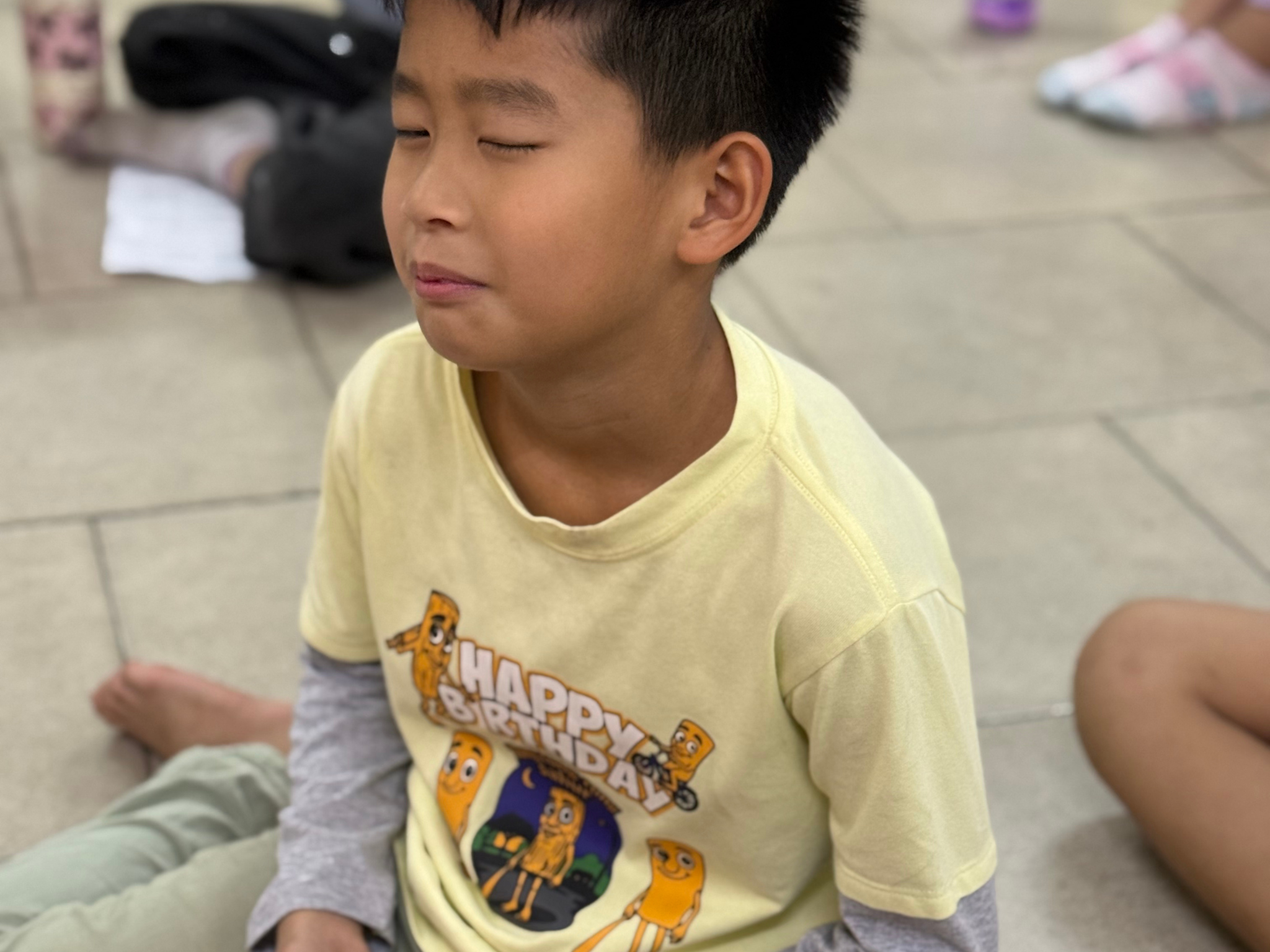
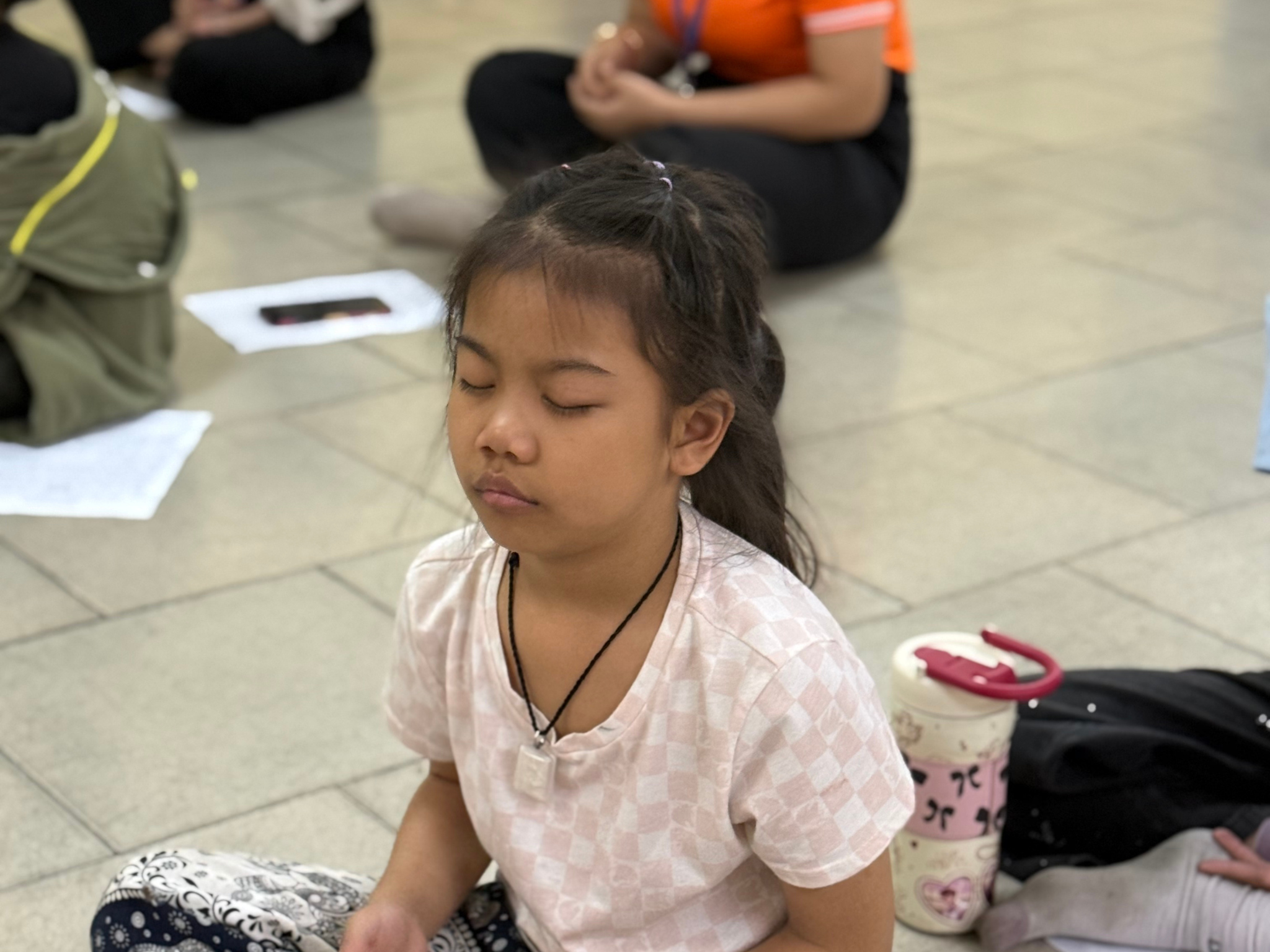
When the children sat down and closed their eyes, the room became quieter.
There was no need to rush.
There was no competition.
There was nothing they needed to achieve.
They simply had an opportunity to sit, breathe, and observe.
For me, this is one of the beautiful aspects of meditation.
We learn by experiencing our own mind.
Bringing Buddhist Wisdom Into Everyday Life
Buddhism is not only something to study in books.
Its teachings can also become part of everyday life.
Mindfulness can help us become more aware.
Compassion can influence how we treat others.
Patience can change how we respond to difficult situations.
Wisdom can help us look more carefully before making decisions.
For children, these teachings can be introduced through simple examples that connect with their daily lives.
We can ask:
How do I treat my friends?
How do I respond when someone makes me angry?
Can I listen without interrupting?
Can I say sorry when I make a mistake?
Can I help someone who is having a difficult day?
These questions connect Buddhist values with real life.
Meditation and Education
As a monk and educator, I believe education should develop more than knowledge.
Education should also help us develop character.
A child may become very successful academically, but learning is even more meaningful when it is accompanied by kindness, responsibility, self-discipline, and awareness.
This is why I see meditation as one part of a broader educational journey.
We are not simply teaching children how to sit quietly.
We are helping them learn how to look within themselves.
And when we understand ourselves better, we can begin to understand others better.
A Small Beginning
The meditation session shown in these photographs may look like a simple activity.
Children sitting on the floor.
Eyes closed.
Hands resting quietly.
But sometimes meaningful learning begins with something very small.
A breath.
A pause.
A moment of silence.
A child noticing their own mind.
We do not need to expect children to become meditation experts.
We simply give them an opportunity to experience stillness and begin developing awareness.
Perhaps one day, when they are older and facing stress, anger, disappointment, or uncertainty, they will remember that they can pause.
They can breathe.
They can observe.
And they can choose how to respond.
My Hope as a Monk and Teacher
My hope is to continue creating opportunities where children, students, Cambodian learners, and international visitors can learn not only about Buddhism, but also experience some of its practical teachings.
Through conversation, meditation, culture, and education, we can learn together.
The purpose is not to make everyone the same.
It is to help each person understand themselves more clearly and live with greater wisdom, kindness, and responsibility.
Sometimes, the first step is simply learning to be still.
From conversation to stillness.
From stillness to awareness.
From awareness to wisdom.
And perhaps that is where meaningful learning begins.
Related Reading
- What Can Children Learn from Buddhism? Lessons Beyond the Classroom
- Learning Buddhism in Cambodia: Monastic Life, Culture & Meditation
- From Conversation to Stillness: A Meditation Experience in Cambodia


