


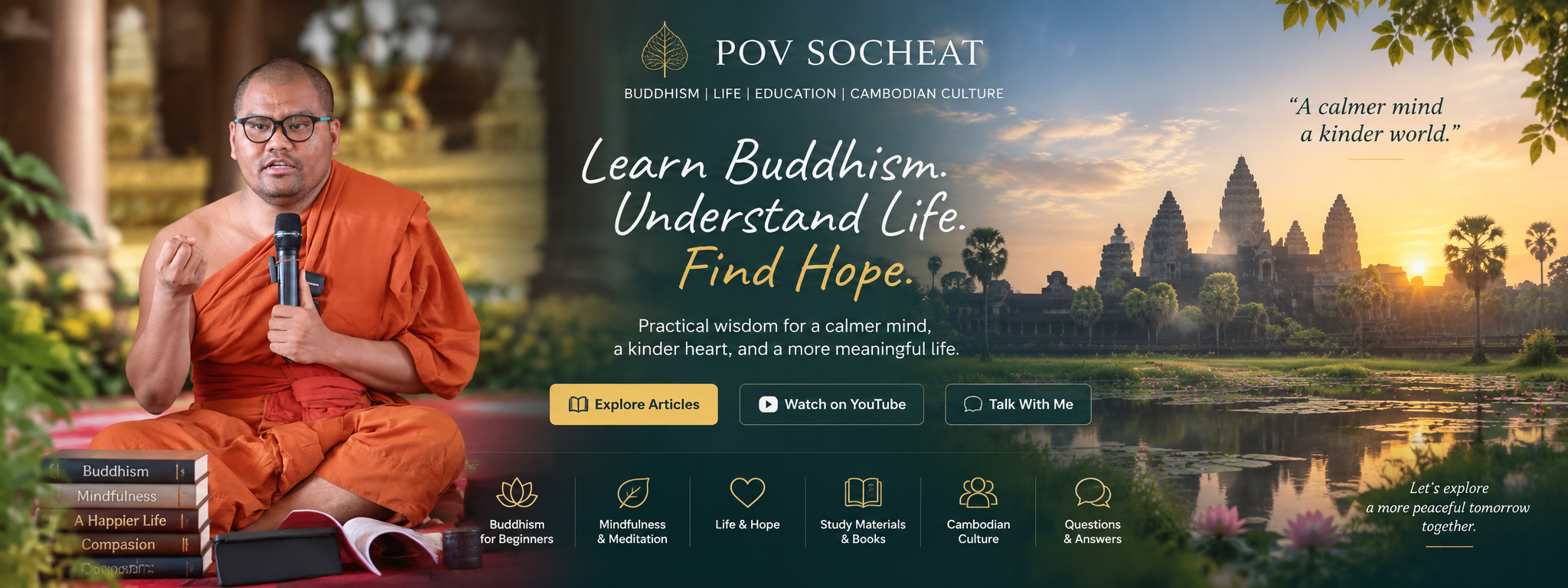
From Conversation to Stillness: A Meditation Experience in Cambodia
When students come to Cambodia to learn about Buddhism and Cambodian culture, I believe learning should not happen only through listening to a presentation or reading books.
Sometimes, after we talk, ask questions, share experiences, and learn from one another, it is important to become quiet.
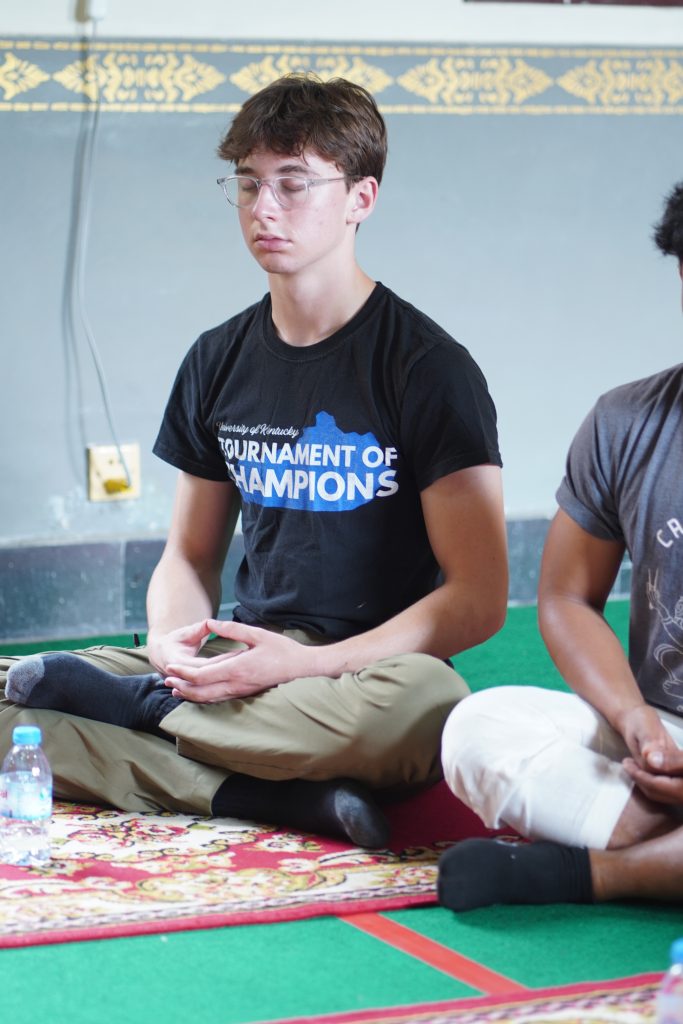
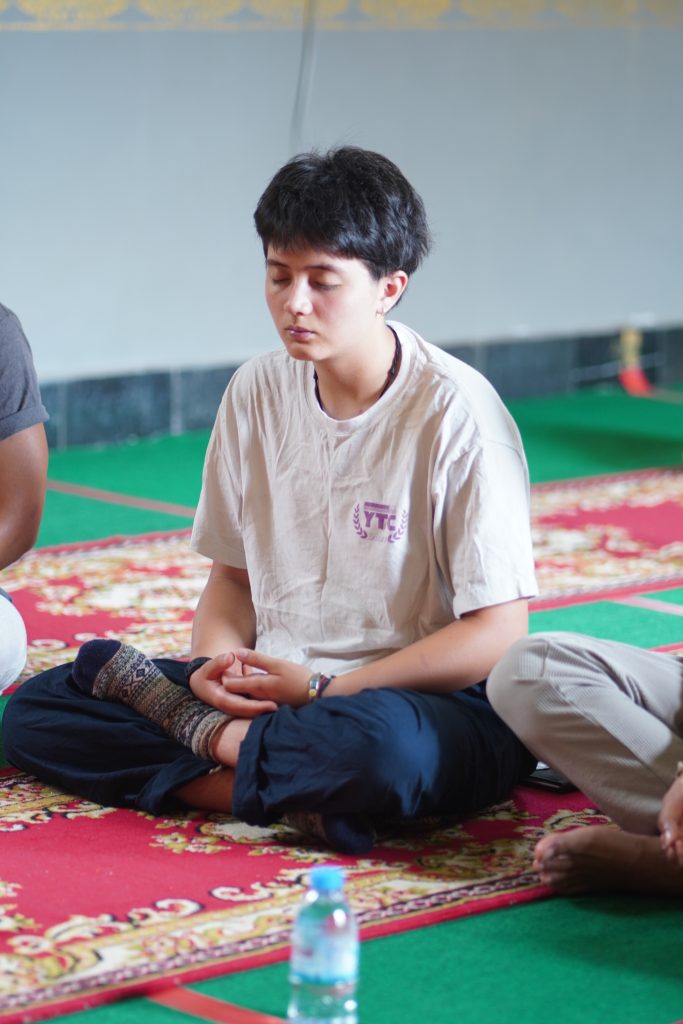
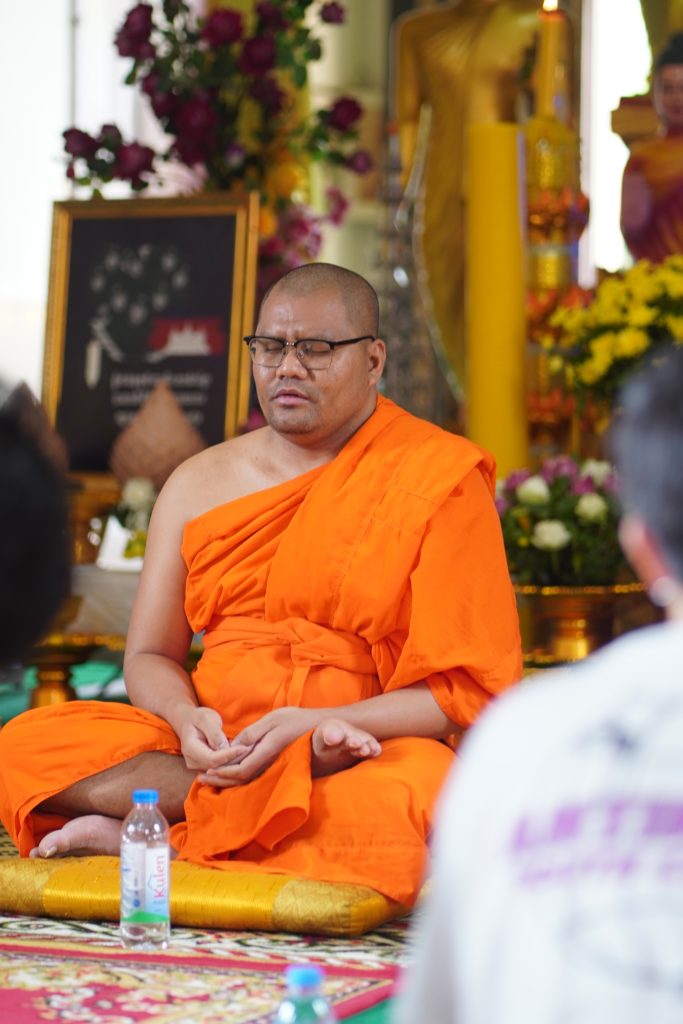
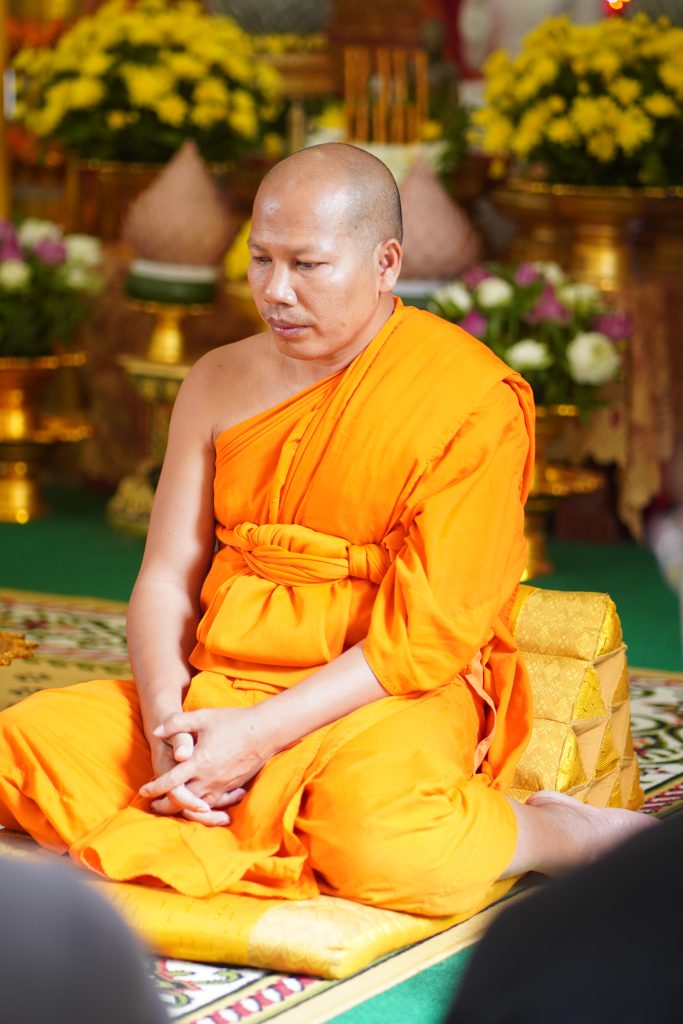
That is why, after meeting with the students and giving a presentation about Buddhism, Cambodian culture, and the life of a Buddhist monk, we spent time together practicing meditation.
On This Page
- From Learning to Practice
- What Do We Learn When We Become Quiet?
- Learning Buddhism Through Experience
- Buddhism, Meditation, and Cambodian Culture
- A Welcome to International Students
From Learning to Practice
During our time together, we talked about Buddhism and how Buddhist teachings are connected with everyday life in Cambodia.
The students had opportunities to ask questions and learn about the life of a monk, Buddhist traditions, Cambodian culture, and the role of Buddhism in Cambodian communities.
We shared ideas.
We listened to one another.
We talked about questions that came from their curiosity and experience.
But Buddhism is not only something we talk about.
Buddhism is also something we practice.
After the presentation and conversation, we moved from speaking to silence.
We sat down.
We became still.
And we practiced meditation together.
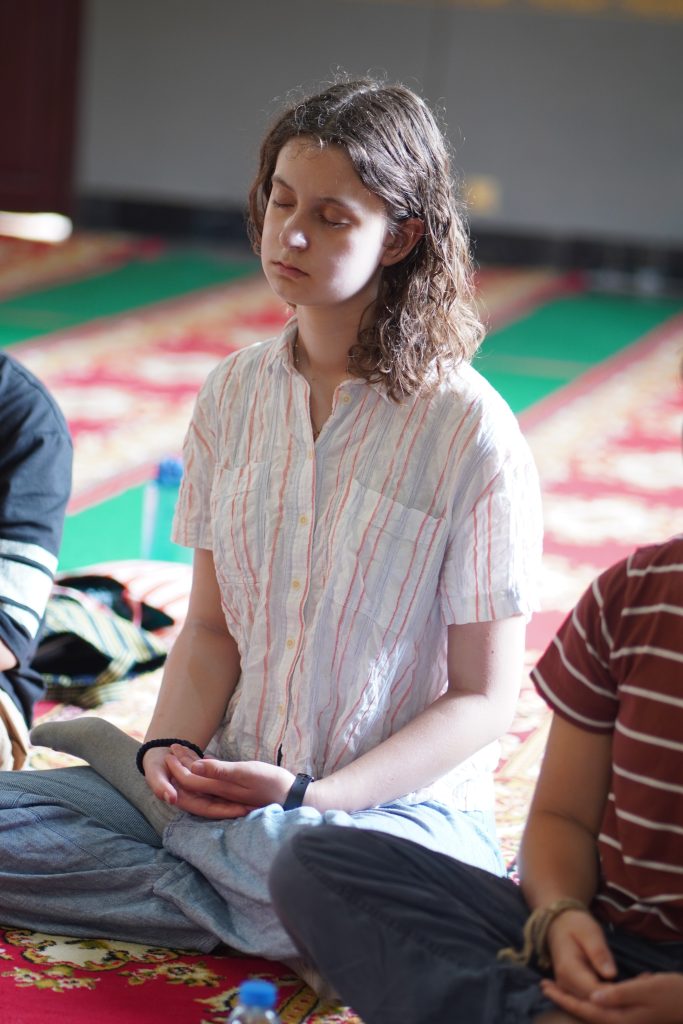
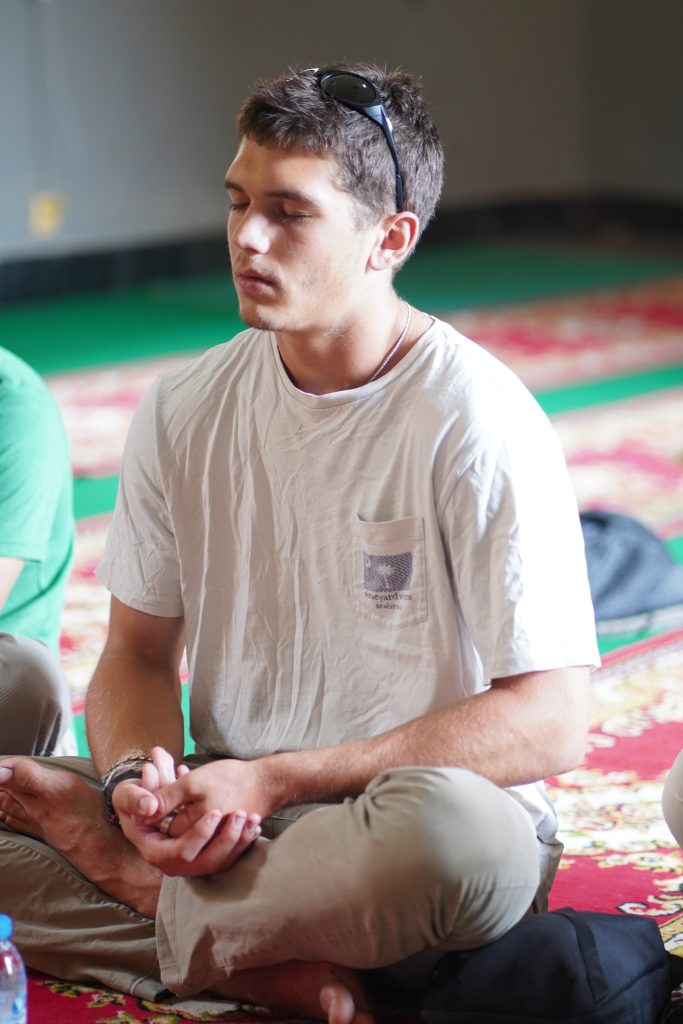
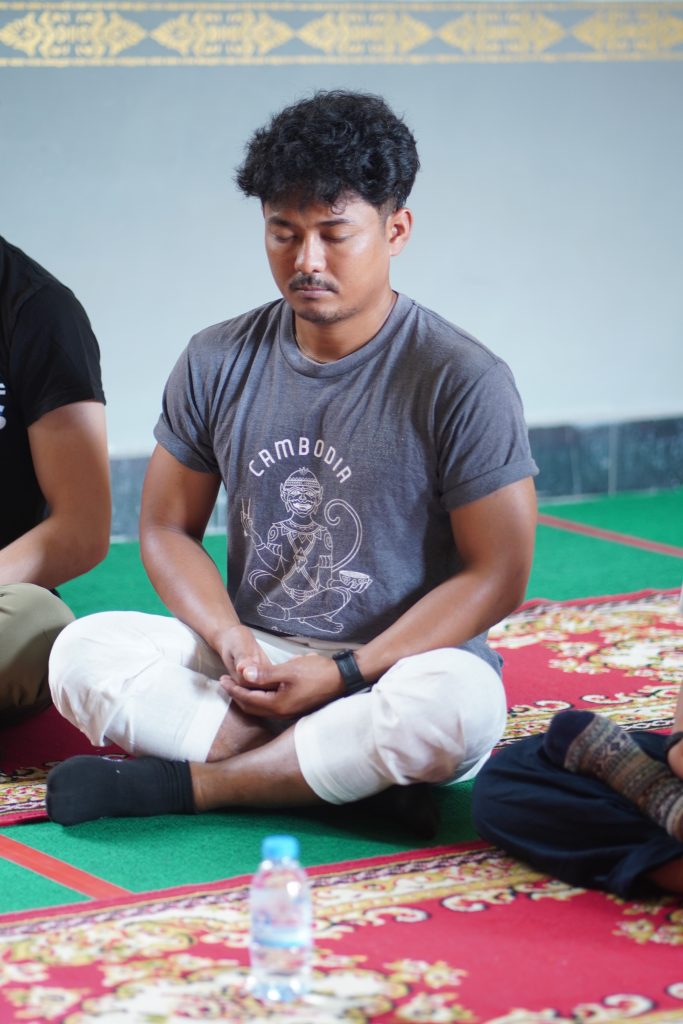
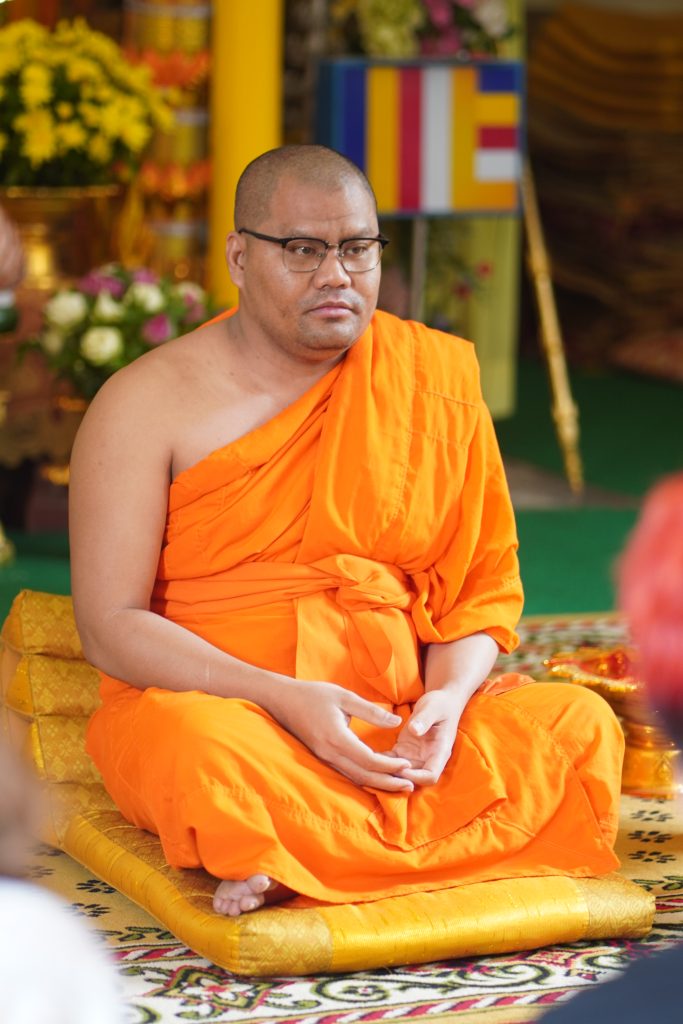
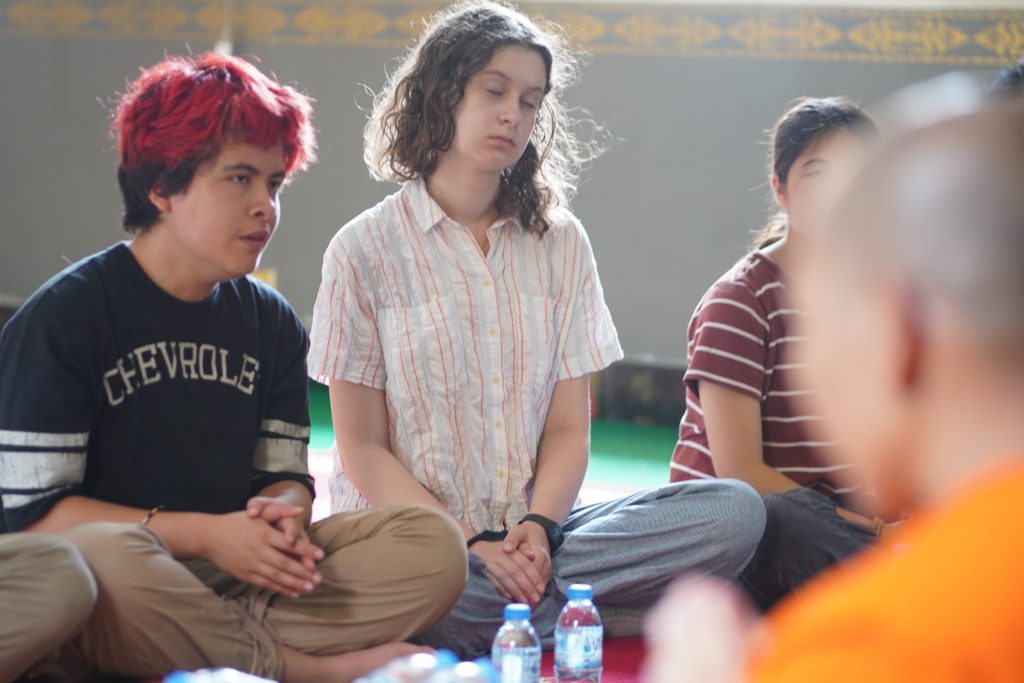
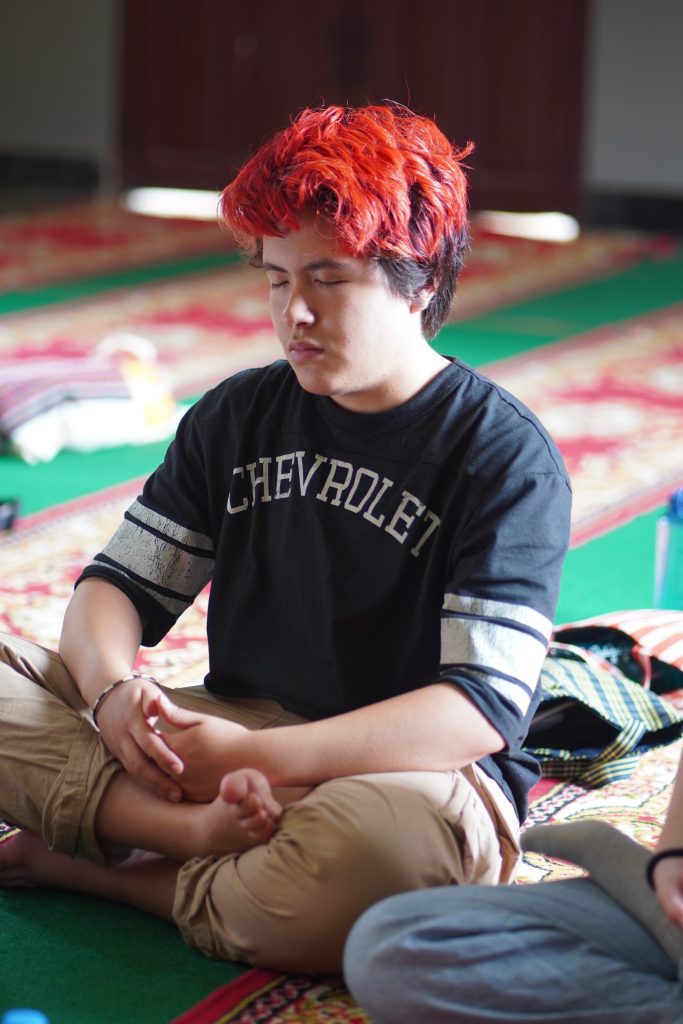
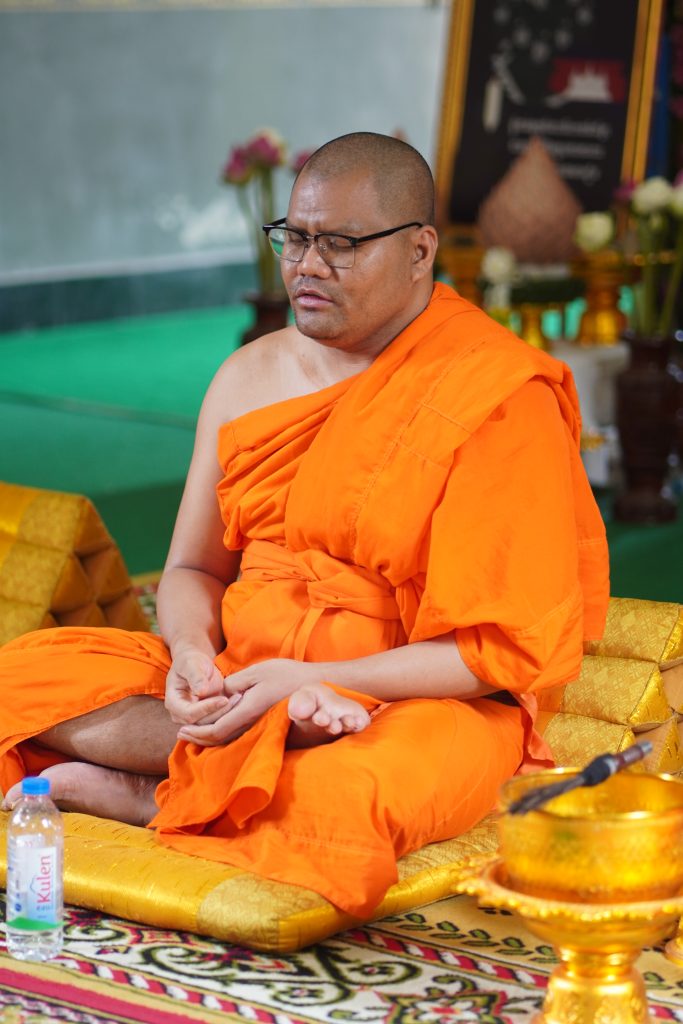
Meditation After Conversation
Meditation gave us a different kind of learning experience.
During conversation, we use words to communicate.
During meditation, we learn to observe ourselves.
We notice the body.
We notice the breath.
We notice thoughts.
We notice feelings.
And slowly, we learn to stay present with what is happening in this moment.
For students who may be experiencing Buddhist meditation for the first time, this can be a meaningful opportunity to experience Buddhism directly rather than simply hearing about it.
They do not have to understand everything immediately.
They do not have to meditate perfectly.
They simply need to be willing to sit, breathe, observe, and learn.
What Do We Learn When We Become Quiet?
When we are constantly busy, we may not have much time to observe our own minds.
We think about the past.
We worry about the future.
We respond to messages.
We study.
We work.
We make plans.
Sometimes we become so busy with life that we forget to simply be present.
Meditation gives us an opportunity to pause.
We can ask ourselves:
What am I feeling right now?
What is happening in my mind?
Can I simply observe without immediately reacting?
These questions are simple, but they can lead us toward deeper understanding.
Learning Buddhism Through Experience
For international students visiting Cambodia, I want their experience to be more than a classroom lesson.
I want them to have opportunities to see, listen, ask, practice, and experience.
They can learn about Buddhism from conversations with monks.
They can visit Buddhist places.
They can learn about Cambodian traditions.
They can observe how people show respect to monks and elders.
They can learn about the Five Precepts.
And they can practice meditation.
Through these experiences, Buddhism becomes something they can connect with personally.
It becomes less about memorizing information and more about understanding how wisdom can be applied to everyday life.
A Moment of Peace
When I look at this moment of meditation, I am reminded that learning does not always require many words.
Sometimes sitting quietly together can also create a meaningful connection.
We may come from different countries.
We may speak different languages.
We may have different educational backgrounds and life experiences.
But when we sit together and simply observe the breath, there is a quiet sense of human connection.
We are all learning how to live.
We are all experiencing happiness and difficulty.
We all have worries.
We all have hopes.
And we all have a mind that can be trained toward greater awareness and kindness.
Buddhism, Meditation, and Cambodian Culture
In Cambodia, Buddhism is deeply connected with culture and community life.
For many generations, Buddhist temples have been places not only for religious practice but also for learning, community gatherings, ceremonies, moral education, and connection between generations.
The presence of monks has traditionally been an important part of Cambodian communities.
Through teaching, ceremonies, guidance, education, and community relationships, monks have played an important role in preserving and sharing Buddhist values.
Today, I believe there is also an opportunity to share this experience with people from around the world.
International students can come to Cambodia not simply as tourists, but as learners.
They can experience Cambodian Buddhist culture respectfully and personally.
They can ask questions.
They can listen to monks.
They can learn meditation.
They can learn about Cambodian traditions.
And they can discover how Buddhist ideas continue to connect with people’s lives today.
My Life as a Monk
For me personally, meditation is not simply something I teach during a student visit.
It is part of my life as a monk.
I have now spent 13 years as a Buddhist monk, and my journey has taken me through many different experiences.
I have traveled from one province to another and to the city in search of education and opportunities to learn.
There have been times when life was not comfortable.
There were journeys when I did not have many of the comforts that people might expect.
But those experiences also taught me something important.
Learning does not always happen in comfortable places.
Sometimes difficulties teach us patience.
Sometimes traveling teaches us openness.
Sometimes meeting different people teaches us understanding.
And sometimes sitting quietly teaches us something that words cannot explain.
My journey as a monk continues to be a journey of learning.
From Help to Harmony
One way I like to describe the spirit of Buddhism is through four simple words:
Help
We can use what we know to help others.
Heal
Through understanding and mindfulness, we can begin to heal from anger, confusion, fear, and suffering.
Hope
Even when life is difficult, wisdom and compassion can give us hope for a better way forward.
Harmony
When we understand ourselves and respect others, we can create greater harmony within ourselves, our families, our communities, and the wider world.
Help. Heal. Hope. Harmony.
These four ideas remind me that Buddhist learning should not remain only inside books or temples.
It should become something we carry into our lives.
A Welcome to International Students
To students from the United States and other countries who are interested in Buddhism, meditation, Cambodian culture, and monastic life:
You are welcome to come and learn.
You do not need to know everything about Buddhism.
You do not need to have previous meditation experience.
You do not need to be a Buddhist.
Come with curiosity.
Come with respect.
Come ready to ask questions.
Come ready to listen.
And come ready to experience.
We can begin with a conversation.
We can learn about Buddhism.
We can explore Cambodian culture.
We can talk about the life of a monk.
And after the conversation, we can simply sit together and practice meditation.
Because sometimes the deepest learning begins when we stop talking and become quiet enough to listen to ourselves.
Learn. Reflect. Practice. Share.
My hope is that every student who comes to learn in Cambodia takes home more than information.
I hope they take home a question.
A new understanding.
A little more mindfulness.
A little more compassion.
A little more respect for another culture.
And perhaps a little more peace within themselves.
Buddhism is not only something to read.
Meditation is not only something to study.
Culture is not only something to observe.
Sometimes, the best way to learn is to be present, meet people, listen deeply, practice together, and experience life with an open mind.
Thank you for coming to Cambodia.
Thank you for learning with me.
And thank you for sitting together in silence.


